
Understanding Greenwich Water Quality and Its Effect on Pipes
Greenwich’s water comes from Aquarion Water Company and contains moderate to high levels of dissolved minerals that directly impact pipe longevity. The local water pH typically ranges between 7.2 and 7.8, which sits in a neutral zone that can still accelerate copper corrosion over decades. This means homes in Riverside and Cos Cob often experience pinhole leaks in copper pipes after 25-30 years, especially in areas with fluctuating water pressure from older municipal lines. Aquarion Water Company.
Water chemistry testing in Fairfield County shows that the dissolved oxygen content in Greenwich’s supply creates an environment where copper develops pitting corrosion from the inside out. This process happens gradually, with microscopic pits forming along the pipe walls until they eventually breach. PEX piping, being a plastic polymer, remains completely immune to this type of chemical degradation, making it an increasingly popular choice for repiping projects in older Greenwich neighborhoods.
Local plumbers frequently encounter this pattern when inspecting homes built between 1950 and 1980. The original copper pipes installed during that era are now reaching the end of their service life, with many showing signs of blue-green staining around joints and fittings. This staining indicates active corrosion that will eventually lead to leaks, often in walls or ceilings where detection comes too late. Emergency Plumbers in Greenwich Who Actually Answer the Phone at 3 AM.
The freeze-thaw cycles common to New England winters add another layer of complexity. When water freezes inside copper pipes, it expands with enough force to split the metal. PEX piping can stretch slightly when frozen, then return to its original shape once thawed, providing a significant advantage in Connecticut’s climate. This property alone has made PEX the preferred choice for many homeowners concerned about burst pipes during cold snaps. Connecticut State Building Code.
Copper Piping: The Traditional Standard for Connecticut Luxury Homes
Copper piping has been the gold standard for residential plumbing in the United States for over a century. Type L copper, the most common grade used in homes, offers exceptional durability with a typical lifespan of 50-70 years when installed correctly. This longevity makes it particularly attractive for high-end Greenwich properties where long-term value preservation matters. Plumbing Stamford.
The material’s proven track record extends beyond simple water delivery. Copper pipes naturally resist bacterial growth, making them ideal for potable water systems where water quality concerns exist. The metal’s thermal conductivity also makes it excellent for hot water distribution, as it maintains temperature better than plastic alternatives during transport through walls and floors.
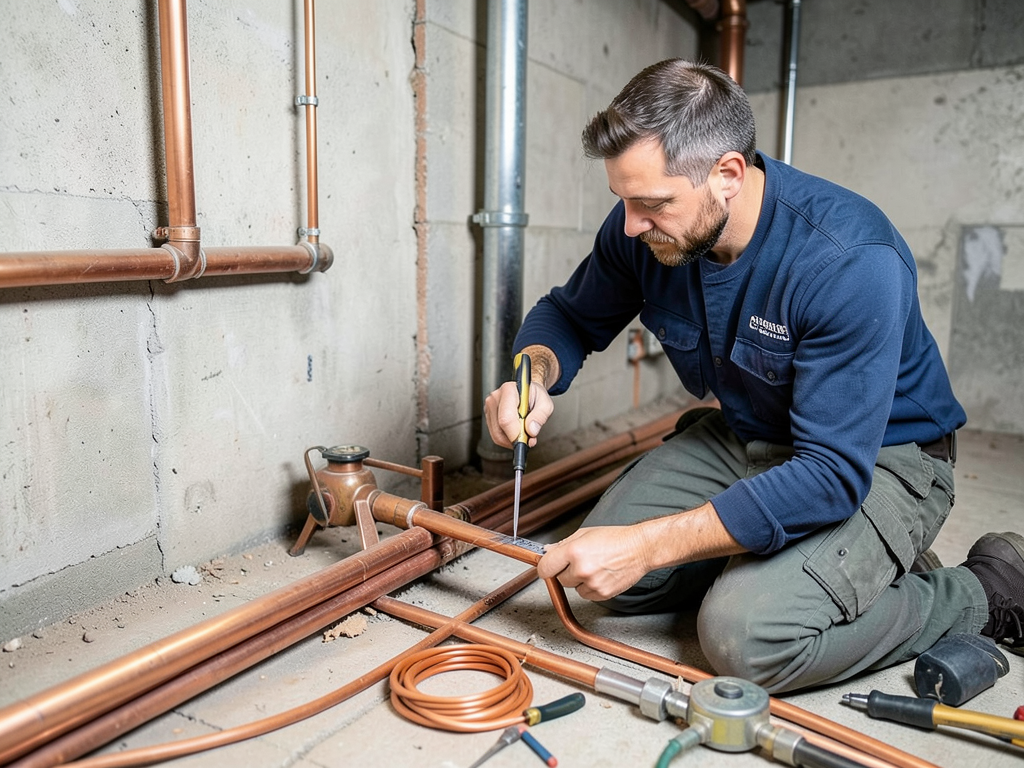
Installation of copper requires skilled craftsmanship, as joints must be soldered properly to prevent future leaks. This creates a higher barrier to entry for DIY repairs and ensures that professional plumbers handle the work. The visible copper joints in unfinished basements or utility areas can also add a certain aesthetic appeal for homeowners who value traditional construction methods. Why We Are the Top Rated Pipe Repair Specialists in Byram.
However, copper’s cost represents a significant factor in the decision-making process. Current market prices for Type L copper tubing run approximately $3.50 to $4.50 per linear foot, with installation labor adding another $4.00 to $6.00 per foot. For a typical 2,000-square-foot Greenwich home requiring 200 linear feet of piping, material and labor costs can easily exceed $1,800 to $2,200.
Another consideration specific to Greenwich’s historic homes involves the structural impact of repiping. Copper pipes require more rigid support and cannot bend around obstacles as easily as PEX. This means more wall penetrations and potentially more drywall repair when retrofitting older properties with plaster walls and original architectural details.
PEX Piping: The Modern, Freeze-Resistant Alternative
PEX (cross-linked polyethylene) piping has revolutionized residential plumbing since its introduction to the US market in the 1980s. The material consists of high-density polyethylene that undergoes a chemical process to create cross-links between polymer chains, resulting in a flexible yet durable pipe that can withstand significant temperature variations.
PEX-A, the highest grade of PEX material, offers superior flexibility and freeze resistance compared to PEX-B or PEX-C variants. This flexibility allows for installation using fewer fittings, as the pipe can bend around corners and obstacles. For Greenwich homes with complex layouts or historic preservation concerns, this means less invasive installation procedures and fewer structural modifications.
The material’s resistance to scale buildup provides another advantage in areas with hard water. Unlike copper, which can develop mineral deposits that restrict flow over time, PEX maintains consistent internal diameter throughout its service life. This characteristic is particularly valuable in Greenwich, where many homes rely on well water or have municipal water with high mineral content.
PEX piping costs significantly less than copper, with material prices ranging from $0.50 to $0.80 per linear foot for PEX-A tubing. Installation labor typically runs $2.50 to $4.00 per foot, as the faster installation process requires less time. For the same 200-foot repiping job mentioned earlier, PEX installation might cost between $700 and $1,200, representing a 60% reduction in material costs.
The material’s flexibility also enables manifold plumbing systems, where a central distribution point supplies multiple fixtures through dedicated lines. This configuration reduces wait times for hot water and allows for easier isolation of plumbing problems. Many modern Greenwich construction projects now specify PEX manifold systems for these efficiency benefits.
Cost Comparison: PEX vs. Copper Installation in Fairfield County
Understanding the true cost difference between PEX and copper requires looking beyond simple material prices. Fairfield County’s high labor rates, typically $85 to $125 per hour for licensed plumbers, significantly impact the total project cost. The faster installation time for PEX often results in lower labor expenses that partially offset the material cost difference.
For a comprehensive cost breakdown, consider a 2,500-square-foot home in Old Greenwich requiring complete repiping. Copper installation would involve approximately 250 linear feet of Type L tubing, 30 fittings, and 15 hours of skilled labor. The material cost alone would be $1,125 to $1,500, with labor adding another $1,275 to $1,875 for a total of $2,400 to $3,375.
The same home repiped with PEX-A would use 250 linear feet of tubing, 20 fittings, and require only 8-10 hours of labor due to the faster installation process. Material costs would be $125 to $200, with labor at $680 to $1,000, bringing the total to $805 to $1,200. This represents a potential savings of $1,595 to $2,170, or roughly 67%.
However, these numbers don’t tell the complete story. Copper’s longer lifespan means that over a 50-year period, the annualized cost difference shrinks considerably. If copper lasts 60 years and PEX lasts 40 years, the copper option becomes more cost-effective when calculated on a per-year basis, despite the higher upfront investment.
Insurance considerations also play a role in the financial analysis. Some insurance companies offer premium discounts for homes with copper plumbing due to its proven reliability and resistance to certain failure modes. These discounts, typically 5-10% on annual premiums, can add up to significant savings over time.
Property value impact represents another financial consideration. High-end Greenwich real estate often commands premium prices, and some buyers specifically look for homes with traditional copper plumbing as a sign of quality construction. However, this preference varies by buyer demographic, with younger buyers often valuing the modern efficiency of PEX systems.
Greenwich Building Codes and Permitting for Repiping Projects
The Town of Greenwich Building Department requires permits for all repiping projects, regardless of the material chosen. The permit process ensures compliance with Connecticut State Building Code Section 305.4, which governs the installation of water supply systems. This code specifically addresses material approvals, joint methods, and pressure testing requirements.
For copper piping installations, the code requires Type K or Type L tubing for potable water distribution, with Type L being the standard for residential applications. Joints must be either soldered or brazed, with specific requirements for cleanliness and flux application. The code also mandates pressure testing at 1.5 times the working pressure for a minimum of 15 minutes to verify system integrity.
PEX piping installations must comply with Section 305.4.5 of the Connecticut code, which addresses cross-linked polyethylene systems. The code requires third-party certification of the PEX material and specific installation methods for different PEX grades. PEX-A installations must use expansion fittings, while PEX-B and PEX-C typically use crimp or compression fittings.
Local amendments to the state code in Greenwich include additional requirements for homes in flood-prone areas near the coast. These amendments mandate that all plumbing penetrations through exterior walls be sealed with approved materials to prevent water intrusion during storm events. This requirement affects both copper and PEX installations equally.
Permit fees for repiping projects in Greenwich range from $150 to $300, depending on the scope of work. The building department also requires inspection at rough-in and final stages, with typical wait times of 2-3 business days for scheduling. Homeowners should factor this timeline into their project planning, especially during peak construction seasons.
Insurance requirements from Aquarion Water Company also influence material selection. The utility company mandates specific backflow prevention devices for certain types of plumbing modifications, with additional requirements for homes that have private wells or irrigation systems. These requirements affect both copper and PEX installations but may favor one material over the other depending on the specific property configuration.
Verdict: Choosing the Right Material for Your Specific Neighborhood (Old Greenwich vs. Back Country)
The choice between PEX and copper ultimately depends on your specific property characteristics and long-term goals. Homes in Old Greenwich, with their proximity to the coast and higher property values, often benefit from copper’s proven longevity and premium perception. The material’s resistance to salt air corrosion and its compatibility with the neighborhood’s historic character make it a logical choice for many homeowners.
However, Back Country Greenwich properties present different considerations. These homes, often set on larger lots with well water systems, may benefit more from PEX’s resistance to mineral scaling and its lower installation impact on finished basements and mechanical rooms. The material’s freeze resistance also provides peace of mind for properties in areas with less consistent heating during winter months.
For homes undergoing whole-house renovations, PEX offers significant advantages in terms of installation speed and reduced structural impact. The ability to run continuous lines without joints means fewer wall penetrations and faster completion times. This can be particularly valuable in Greenwich, where many homeowners want to minimize construction disruption to their daily lives.
Age of the existing plumbing system also influences the decision. Homes with original copper pipes from the 1960s or 1970s often have corrosion patterns that make PEX a more practical choice for replacement. The flexibility of PEX allows for easier navigation around existing structures and can reduce the need for extensive demolition during the repiping process.
Future plans for the property should factor into the decision as well. If you plan to sell within five years, copper may provide better return on investment in certain Greenwich neighborhoods. However, if you’re planning to stay long-term, PEX’s lower initial cost and adequate lifespan may make more financial sense, especially when combined with its energy efficiency benefits.
Water quality testing provides the most definitive guidance for material selection. Homes with particularly acidic water or high mineral content may benefit from PEX’s chemical resistance, while properties with neutral pH and good water quality can confidently choose either material based on other factors. Many Greenwich plumbers offer water testing services to help homeowners make informed decisions.
Consider also the specific fixtures and appliances in your home. High-end fixtures often perform better with copper’s consistent water pressure delivery, while modern low-flow fixtures work equally well with either material. Homes with complex irrigation systems or outdoor water features may benefit from PEX’s freeze resistance for those specific applications.
The environmental impact of each material deserves consideration as well. Copper mining and processing have significant environmental costs, while PEX production is less resource-intensive. However, copper’s recyclability at end-of-life and PEX’s longer service life in many applications create a complex environmental equation that varies by specific use case.
Ultimately, the best choice depends on your specific circumstances, budget, and priorities. A qualified Greenwich plumber can assess your home’s unique characteristics and provide personalized recommendations based on local conditions, building codes, and your long-term plans for the property.
Frequently Asked Questions
Is PEX safe for drinking water in Connecticut homes?
Yes, PEX piping certified to ASTM F876/F877 standards is approved for potable water use in Connecticut. The material has been extensively tested for chemical leaching and meets all federal and state requirements for drinking water safety. Many Greenwich homes have used PEX successfully for over 20 years without issues.
How long does a typical repiping project take in a Greenwich home?
A complete repiping project for a 2,000-square-foot home typically takes 3-5 days for PEX installation and 5-7 days for copper. This includes removal of old pipes, installation of new piping, pressure testing, and minor wall repairs. Copper projects take longer due to more complex joint work and fitting requirements.
Will repiping increase my home’s value in the Greenwich real estate market?
Modern, code-compliant plumbing typically adds value to your home, though the premium for copper vs. PEX varies by neighborhood. In high-end areas like Old Greenwich, copper may provide a slight advantage for luxury buyers, while in other areas, the functional improvement matters more than the specific material used.
What’s the warranty coverage for PEX vs. copper piping?
Most PEX piping manufacturers offer 25-year warranties on their products, while copper typically carries a 50-year warranty from major manufacturers. However, proper installation is critical for both materials, and workmanship warranties from plumbing contractors usually cover 1-5 years regardless of the pipe material chosen.
Can I mix PEX and copper piping in my home?
Yes, PEX and copper can be connected using approved transition fittings. Many homeowners choose to use PEX for new additions or renovations while maintaining existing copper in other areas. This approach can be cost-effective while preserving the aesthetic of visible copper in certain areas of the home.
{
“@context”: “https://schema.org”,
“@type”: “BlogPosting”,
“headline”: “Should You Choose PEX or Copper for Your Greenwich Home Repiping?”,
“description”: “Discover which piping material works best for Greenwich homes. Compare PEX vs copper durability, costs, and code compliance for Connecticut’s unique climate and water quality.”,
“wordCount”: 2332,
“datePublished”: “2026-03-12T10:21:00.000Z”,
“dateModified”: “2026-03-12T10:21:00.000Z”,
“inLanguage”: “en-US”,
“mainEntityOfPage”: {
“@type”: “WebPage”,
“@id”: “https://unitedplumbinggreenwich.com”
},
“publisher”: {
“@type”: “LocalBusiness”,
“name”: “United Plumbing Greenwich”,
“url”: “https://unitedplumbinggreenwich.com”
},
“author”: {
“@type”: “Organization”,
“name”: “United Plumbing Greenwich”,
“url”: “https://unitedplumbinggreenwich.com”
},
“image”: {
“@type”: “ImageObject”,
“url”: “https://unitedplumbinggreenwich.com/wp-content/uploads/2026/03/should-you-choose-pex-or-copper-for-your-greenwich-1.png”
}
}
{
“@context”: “https://schema.org”,
“@type”: “Plumber”,
“name”: “United Plumbing Greenwich”,
“url”: “https://unitedplumbinggreenwich.com”,
“address”: {
“@type”: “PostalAddress”,
“addressLocality”: “Greenwich”
},
“areaServed”: {
“@type”: “City”,
“name”: “Greenwich”
}
}
{
“@context”: “https://schema.org”,
“@type”: “FAQPage”,
“mainEntity”: [
{
“@type”: “Question”,
“name”: “Is PEX safe for drinking water in Connecticut homes?”,
“acceptedAnswer”: {
“@type”: “Answer”,
“text”: “Yes, PEX piping certified to ASTM F876/F877 standards is approved for potable water use in Connecticut. The material has been extensively tested for chemical leaching and meets all federal and state requirements for drinking water safety. Many Greenwich homes have used PEX successfully for over 20 years without issues.”
}
},
{
“@type”: “Question”,
“name”: “How long does a typical repiping project take in a Greenwich home?”,
“acceptedAnswer”: {
“@type”: “Answer”,
“text”: “A complete repiping project for a 2,000-square-foot home typically takes 3-5 days for PEX installation and 5-7 days for copper. This includes removal of old pipes, installation of new piping, pressure testing, and minor wall repairs. Copper projects take longer due to more complex joint work and fitting requirements.”
}
},
{
“@type”: “Question”,
“name”: “Will repiping increase my home’s value in the Greenwich real estate market?”,
“acceptedAnswer”: {
“@type”: “Answer”,
“text”: “Modern, code-compliant plumbing typically adds value to your home, though the premium for copper vs. PEX varies by neighborhood. In high-end areas like Old Greenwich, copper may provide a slight advantage for luxury buyers, while in other areas, the functional improvement matters more than the specific material used.”
}
},
{
“@type”: “Question”,
“name”: “What’s the warranty coverage for PEX vs. copper piping?”,
“acceptedAnswer”: {
“@type”: “Answer”,
“text”: “Most PEX piping manufacturers offer 25-year warranties on their products, while copper typically carries a 50-year warranty from major manufacturers. However, proper installation is critical for both materials, and workmanship warranties from plumbing contractors usually cover 1-5 years regardless of the pipe material chosen.”
}
},
{
“@type”: “Question”,
“name”: “Can I mix PEX and copper piping in my home?”,
“acceptedAnswer”: {
“@type”: “Answer”,
“text”: “Yes, PEX and copper can be connected using approved transition fittings. Many homeowners choose to use PEX for new additions or renovations while maintaining existing copper in other areas. This approach can be cost-effective while preserving the aesthetic of visible copper in certain areas of the home.”
}
}
]
}
{
“@context”: “https://schema.org”,
“@type”: “BreadcrumbList”,
“itemListElement”: [
{
“@type”: “ListItem”,
“position”: 1,
“name”: “Home”,
“item”: “https://unitedplumbinggreenwich.com”
},
{
“@type”: “ListItem”,
“position”: 2,
“name”: “Blog”,
“item”: “https://unitedplumbinggreenwich.com/blog”
},
{
“@type”: “ListItem”,
“position”: 3,
“name”: “Should You Choose PEX or Copper for Your Greenwich Home Repiping?”
}
]
}
{
“@context”: “https://schema.org”,
“@type”: “Service”,
“serviceType”: “Plumbing”,
“provider”: {
“@type”: “LocalBusiness”,
“name”: “United Plumbing Greenwich”,
“url”: “https://unitedplumbinggreenwich.com”
},
“areaServed”: {
“@type”: “City”,
“name”: “Greenwich”
},
“description”: “Discover which piping material works best for Greenwich homes. Compare PEX vs copper durability, costs, and code compliance for Connecticut’s unique climate and water quality.”
}