
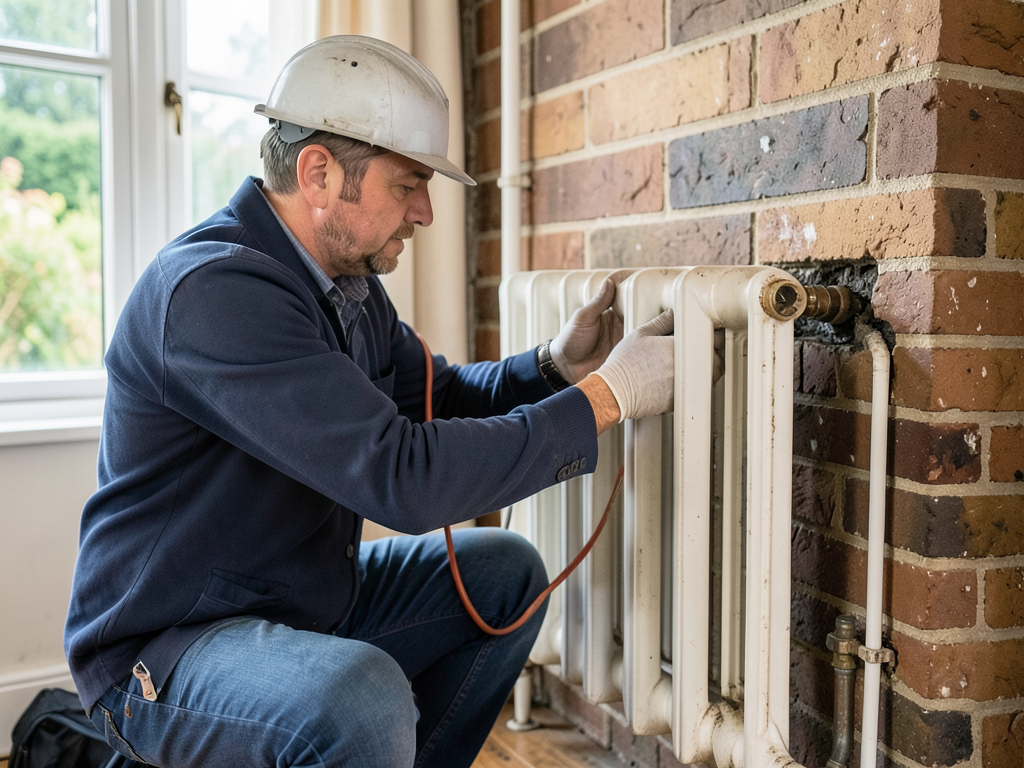
That hissing sound from your steam radiators isn’t just annoying—it’s your heating system crying for help. In Greenwich’s historic homes, this common problem often signals worn-out air vents that need professional replacement. Those tiny vents control when steam enters your radiators and when air escapes. When they fail, you get noise, uneven heating, and higher fuel bills.
Steam radiators work by filling with hot vapor that releases heat through the metal fins. As steam enters, air must escape through the vent. When that vent gets clogged with mineral deposits or rust, steam forces its way through, creating that characteristic hiss. Sometimes you’ll even see water spitting from the vent—a clear sign of failure.
Greenwich’s older homes, particularly those built before 1950 in neighborhoods like Old Greenwich and Riverside, typically use one-pipe steam systems. These systems rely entirely on properly functioning vents to distribute heat evenly throughout the house. When vents fail, some rooms stay cold while others overheat, forcing your boiler to work overtime. Expert Boiler Repair for Historic Greenwich Homes.
The solution isn’t complicated, but it requires specific knowledge of steam heating systems. Professional steam vent replacement involves selecting the correct vent size and type for your radiator’s location and your system’s pressure settings. Using the wrong vent can make problems worse or create new ones.
Signs Your Steam Vents Need Replacement
Steam vent problems show themselves in several ways. The most obvious is that persistent hissing sound that keeps you awake at night. But there are other warning signs that indicate your vents need attention: Fixing a Persistent Clog in Your Glenville Kitchen Sink.
Constant hissing – If your radiators hiss continuously during heating cycles, the vent isn’t closing properly. Steam should enter the radiator, the vent should close, and the hissing should stop once the radiator is full.
Water spitting – When you see water droplets coming from the vent, it means the internal mechanism is failing. The vent should never leak water under normal operation.
Cold radiators – If a radiator stays cold while others heat up, the vent might be completely blocked. Air can’t escape, so steam can’t enter.
Uneven heating – Rooms that never seem to get warm enough or stay too hot indicate vents that aren’t properly sized or positioned for their location in the system.
High fuel bills – When your heating system runs longer than it should to achieve comfortable temperatures, failing vents often contribute by preventing efficient heat distribution.
Our Specialized Process for Steam Vent Replacement
Steam vent replacement requires more than just screwing in a new part. Our process ensures your entire system works efficiently:
System Assessment – We evaluate your boiler pressure, radiator sizes, and system layout. One-pipe systems in Greenwich’s historic homes often need different vent types than newer installations.
Vent Selection – We choose between adjustable and non-adjustable vents based on radiator location. Main vents for steam mains are larger and handle more air volume than individual radiator vents.
Installation – We remove old vents carefully to avoid damaging pipe threads. Many Greenwich homes have brass fittings that require specific techniques to prevent stripping.
System Balancing – After installation, we test each radiator’s heating pattern and adjust vent settings to ensure even heat distribution throughout your home.
Pressure Testing – We verify that your boiler pressure remains within manufacturer specifications. Many steam problems stem from excessive pressure that forces steam through vents prematurely.
Why Greenwich Homeowners Trust Us for Steam System Repairs
Steam heating systems require specialized knowledge that many general plumbers lack. Our technicians understand the nuances of one-pipe and two-pipe systems common in Fairfield County’s older homes. Emergency Plumbers in Greenwich Who Actually Answer the Phone at 3 AM.
We service all major vent brands including Hoffman Specialty, Gorton Heating Corp, and Maid-O-Mist. Each brand offers specific advantages for different applications. Hoffman #75 vents work well for most radiators, while Gorton #2 vents handle higher air volumes for larger radiators. Hoffman Specialty steam vents.
Our experience with Greenwich’s historic architecture means we understand the challenges of working in homes with original plaster walls, narrow access spaces, and delicate finishes. We protect your home during repairs and clean thoroughly afterward. Why We Are the Top Rated Pipe Repair Specialists in Byram.
We also recognize that steam systems in coastal Connecticut face unique challenges. Salt air accelerates corrosion, and the freeze-thaw cycles common in our climate stress pipe connections. Our replacement parts include corrosion-resistant options when appropriate.
Types of Vents We Service: Main Vents vs. Radiator Vents
Steam systems use two main types of air vents, each serving a specific purpose in the heating cycle.
Main Vents – These larger vents are installed on steam mains and handle the bulk of air removal when the system starts. They allow steam to reach all radiators quickly, reducing heating time and fuel consumption. A typical main vent might handle 10-15 times the air volume of a radiator vent.
Radiator Vents – These smaller vents are screwed directly into the radiator’s air valve port. They control individual radiator heating and allow for room-by-room temperature adjustment in some systems. Adjustable radiator vents let you fine-tune heat output for rooms with different exposure or usage patterns.
The relationship between main and radiator vents is critical. If main vents are undersized, steam takes longer to reach radiators, and radiator vents work harder than designed. This leads to premature failure and the exact problems you’re experiencing now.
Frequently Asked Questions About Steam Vents
How long should steam vents last?
Quality steam vents typically last 5-10 years in normal conditions. However, in Greenwich’s coastal environment with salt air exposure, you might need replacement every 3-5 years. Regular inspection helps catch failing vents before they cause system-wide problems.
Can I replace steam vents myself?
While technically possible, DIY vent replacement carries risks. Steam systems operate under pressure, and improper installation can cause scalding injuries or system damage. Thread damage from over-tightening is common among inexperienced installers. Professional installation includes pressure testing and system balancing that DIY work can’t provide.
Will new vents really reduce my heating bills?
Yes. Properly sized and functioning vents can reduce fuel consumption by 10-20% by allowing your boiler to reach operating temperature faster and maintain it more efficiently. When steam distribution improves, your system doesn’t need to run as long to heat your home.
What causes steam vents to fail?
Mineral deposits from water, rust from pipe corrosion, and mechanical wear are the primary causes. In areas with hard water, mineral buildup happens faster. The constant heating and cooling cycles stress the internal mechanisms, eventually causing them to stick open or closed.
How do I know if my vents are the right size?
Vent sizing depends on radiator size, room exposure, and system pressure. A vent that’s too small causes slow heating; one that’s too large can cause steam to enter radiators too quickly, leading to knocking sounds and uneven heating. Professional assessment ensures proper sizing for your specific system.
Cost Factors for Steam Vent Replacement
Several factors influence steam vent replacement costs in Greenwich homes. System size matters—larger homes with more radiators require more vents and time to service. Vent accessibility affects labor costs; some radiators are tucked behind furniture or in tight spaces that complicate replacement.
The type of vent selected also impacts cost. Basic non-adjustable vents are economical, while high-quality adjustable vents with better corrosion resistance cost more upfront but often last longer in our coastal climate.
System condition plays a role too. If your boiler pressure is incorrect or your steam mains lack proper insulation, we might recommend additional work to maximize the benefits of new vents. Sometimes what appears to be a vent problem is actually a system imbalance that requires broader attention.
We provide clear, upfront pricing after our initial assessment. There are no hidden fees, and we explain exactly what work is needed before starting any replacement.
Maintenance Tips for Steam Heating Systems
Regular maintenance extends the life of your steam system and its components. Check vents annually for signs of corrosion or damage. Listen during heating cycles—new hissing sounds often indicate developing problems.
Drain your boiler according to manufacturer recommendations, typically once per heating season. This removes sediment that can clog vents and reduce efficiency. Check pressure settings; most residential steam systems operate at 2 PSI or less. Higher pressure wastes fuel and stresses system components. The Most Reliable Drain Cleaning Services in Old Greenwich.
Insulate steam pipes in unheated areas to prevent heat loss and reduce condensation that leads to corrosion. Replace any damaged pipe insulation promptly, as exposed pipes can freeze in extreme cold.
Consider a professional system tune-up every few years. A technician can identify developing problems before they cause system failure or require expensive emergency repairs.
Call (475) 320-3733 today to schedule your steam vent inspection
Don’t let that hissing sound drive you crazy another night. Our steam heating specialists can diagnose your system’s problems and recommend the right solution. Whether you need simple vent replacement or a complete system assessment, we’ll restore quiet, efficient heating to your Greenwich home.
Call (475) 320-3733 today to schedule your steam vent inspection. We offer same-day service for urgent problems and can often complete vent replacement in a single visit. Stop wasting money on high fuel bills and enjoy consistent, quiet heat throughout your home.
Pick up the phone and call (475) 320-3733 before the next cold snap hits. Your radiators shouldn’t sound like a tea kettle—they should provide silent, efficient warmth that makes your home comfortable all winter long. For more information, visit U.S. Department of Energy heating systems guide.
{
“@context”: “https://schema.org”,
“@type”: “BlogPosting”,
“headline”: “Stopping That Annoying Hissing Sound from Your Steam Radiators”,
“description”: “Tired of noisy steam radiators in your Greenwich home? Learn why they hiss and how professional steam vent replacement can restore quiet, efficient heating.”,
“wordCount”: 1607,
“datePublished”: “2026-04-25T15:12:00.000Z”,
“dateModified”: “2026-04-25T15:12:00.000Z”,
“inLanguage”: “en-US”,
“mainEntityOfPage”: {
“@type”: “WebPage”,
“@id”: “https://unitedplumbinggreenwich.com”
},
“publisher”: {
“@type”: “LocalBusiness”,
“name”: “United Plumbing Greenwich”,
“url”: “https://unitedplumbinggreenwich.com”
},
“author”: {
“@type”: “Organization”,
“name”: “United Plumbing Greenwich”,
“url”: “https://unitedplumbinggreenwich.com”
},
“image”: {
“@type”: “ImageObject”,
“url”: “https://unitedplumbinggreenwich.com/wp-content/uploads/2026/03/stopping-that-annoying-hissing-sound-from-your-ste-1.png”
}
}
{
“@context”: “https://schema.org”,
“@type”: “Plumber”,
“name”: “United Plumbing Greenwich”,
“url”: “https://unitedplumbinggreenwich.com”,
“address”: {
“@type”: “PostalAddress”,
“addressLocality”: “Greenwich”
},
“areaServed”: {
“@type”: “City”,
“name”: “Greenwich”
}
}
{
“@context”: “https://schema.org”,
“@type”: “FAQPage”,
“mainEntity”: [
{
“@type”: “Question”,
“name”: “How long should steam vents last?”,
“acceptedAnswer”: {
“@type”: “Answer”,
“text”: “Quality steam vents typically last 5-10 years in normal conditions. However, in Greenwich’s coastal environment with salt air exposure, you might need replacement every 3-5 years. Regular inspection helps catch failing vents before they cause system-wide problems.”
}
},
{
“@type”: “Question”,
“name”: “Can I replace steam vents myself?”,
“acceptedAnswer”: {
“@type”: “Answer”,
“text”: “While technically possible, DIY vent replacement carries risks. Steam systems operate under pressure, and improper installation can cause scalding injuries or system damage. Thread damage from over-tightening is common among inexperienced installers. Professional installation includes pressure testing and system balancing that DIY work can’t provide.”
}
},
{
“@type”: “Question”,
“name”: “Will new vents really reduce my heating bills?”,
“acceptedAnswer”: {
“@type”: “Answer”,
“text”: “Yes. Properly sized and functioning vents can reduce fuel consumption by 10-20% by allowing your boiler to reach operating temperature faster and maintain it more efficiently. When steam distribution improves, your system doesn’t need to run as long to heat your home.”
}
},
{
“@type”: “Question”,
“name”: “What causes steam vents to fail?”,
“acceptedAnswer”: {
“@type”: “Answer”,
“text”: “Mineral deposits from water, rust from pipe corrosion, and mechanical wear are the primary causes. In areas with hard water, mineral buildup happens faster. The constant heating and cooling cycles stress the internal mechanisms, eventually causing them to stick open or closed.”
}
},
{
“@type”: “Question”,
“name”: “How do I know if my vents are the right size?”,
“acceptedAnswer”: {
“@type”: “Answer”,
“text”: “Vent sizing depends on radiator size, room exposure, and system pressure. A vent that’s too small causes slow heating; one that’s too large can cause steam to enter radiators too quickly, leading to knocking sounds and uneven heating. Professional assessment ensures proper sizing for your specific system.”
}
}
]
}
{
“@context”: “https://schema.org”,
“@type”: “BreadcrumbList”,
“itemListElement”: [
{
“@type”: “ListItem”,
“position”: 1,
“name”: “Home”,
“item”: “https://unitedplumbinggreenwich.com”
},
{
“@type”: “ListItem”,
“position”: 2,
“name”: “Blog”,
“item”: “https://unitedplumbinggreenwich.com/blog”
},
{
“@type”: “ListItem”,
“position”: 3,
“name”: “Stopping That Annoying Hissing Sound from Your Steam Radiators”
}
]
}
{
“@context”: “https://schema.org”,
“@type”: “Service”,
“serviceType”: “Plumbing”,
“provider”: {
“@type”: “LocalBusiness”,
“name”: “United Plumbing Greenwich”,
“url”: “https://unitedplumbinggreenwich.com”
},
“areaServed”: {
“@type”: “City”,
“name”: “Greenwich”
},
“description”: “Tired of noisy steam radiators in your Greenwich home? Learn why they hiss and how professional steam vent replacement can restore quiet, efficient heating.”
}