
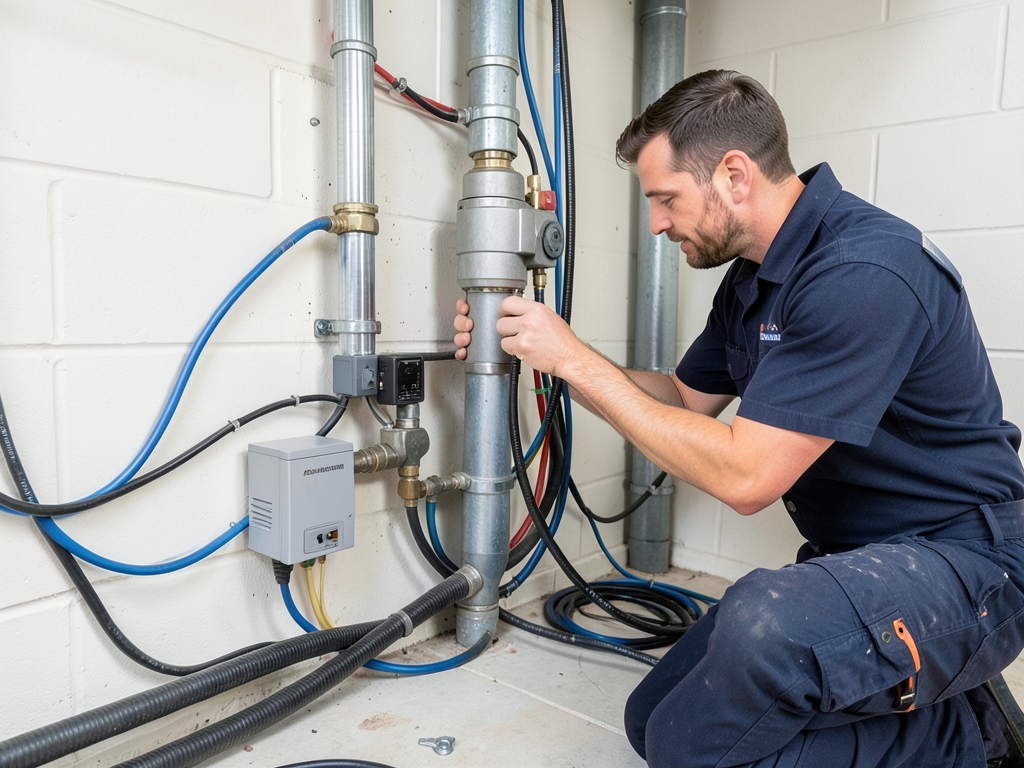
Converting a garage into a home gym in Greenwich requires careful planning around plumbing infrastructure. Whether you need a simple utility sink for water bottles or a full bathroom for post-workout showers, understanding the technical requirements upfront will save you time and money. Plumbing Stamford.
The Royal Borough of Greenwich Building Control requires specific compliance for any garage conversion that adds plumbing fixtures. You’ll need to consider drainage connections, water supply lines, ventilation, and compliance with Part G (Sanitation) and Part H (Drainage) of the Building Regulations. The existing garage slab may need trenching for new pipes, and the distance to the main soil vent pipe will determine if you need a macerator system or traditional gravity-fed drainage. Royal Borough of Greenwich Building Control.
Most Greenwich garages built before 2000 have concrete slabs that sit directly on soil with minimal insulation. This creates unique challenges for running new supply pipes without risking freeze damage in winter. You’ll also need to consider the water pressure requirements for multiple fixtures running simultaneously and whether your existing boiler can handle the additional load from a new shower or utility room. Expert Boiler Repair for Historic Greenwich Homes.
Before starting any work, you must submit a building notice to the Royal Borough of Greenwich Building Control. They’ll require detailed plumbing plans showing how you’ll connect to the existing drainage system and meet water efficiency requirements. The council has specific rules about external soil pipe runs and requires acoustic insulation for any pipes running through habitable spaces. The Most Reliable Drain Cleaning Services in Old Greenwich.
The cost of plumbing a garage conversion in Greenwich typically ranges from £2,500 to £8,000 depending on the complexity. A simple utility sink installation might cost around £1,500, while adding a full bathroom with shower could reach £6,000 or more. These costs include materials, labor, and the necessary building control inspections.. Read more about Navigating Plumbing Permits for Renovations in the Greenwich Historical District.
Assessing Your Garage’s Plumbing Feasibility
Before committing to any plumbing work, you need to assess whether your garage can support the fixtures you want. The first step is locating your main soil vent pipe (SVP) – this is the vertical pipe that carries waste from your home to the sewer. The closer your garage is to this pipe, the easier and cheaper the installation will be.
Measure the distance from your garage to the nearest SVP. If it’s within 6 meters and you have a clear path through an external wall, you can likely use traditional gravity-fed drainage. Beyond 6 meters or with obstacles like patios or driveways in the way, you’ll need to consider a macerator pump system or dig a new trench across your property.
Check your water pressure by timing how long it takes to fill a 10-liter bucket from your main cold tap. If it takes more than 30 seconds, you may have pressure issues that could affect multiple fixtures running simultaneously. Greenwich properties often have pressure variations depending on their elevation relative to the local water tower.
Examine your garage floor construction. Most garages have a concrete slab that sits directly on soil with minimal insulation. Running new pipes through this slab requires cutting channels and ensuring proper insulation to prevent freezing. The floor level also matters – if your garage floor is significantly lower than your house, you may need a pumped system to move waste uphill to connect with your existing drainage.
Consider your existing heating system’s capacity. Adding a new shower or bathroom increases the hot water demand. If you have a combi boiler, check its flow rate – most standard units provide 10-15 liters per minute, which might be insufficient for simultaneous use with existing bathrooms.
Drainage Solutions: Gravity-Fed vs. Macerator Systems
The choice between gravity-fed and macerator systems depends on your garage’s distance from the main drainage stack and the complexity of installation. Gravity-fed systems use the natural fall of pipes to move waste away from fixtures, while macerators grind waste and pump it through smaller pipes that can run horizontally or uphill.
Gravity-fed drainage requires pipes with a minimum fall of 1:40 (25mm drop per meter of run). This means you need enough vertical drop to create the necessary slope. For a 5-meter run, you’d need at least 125mm of fall. This often requires digging a trench outside your garage to bury the drainage pipes below the frost line.
Macerator systems like Saniflo allow you to install a bathroom virtually anywhere without major construction. These units can pump waste up to 5 meters vertically and 100 meters horizontally through small-diameter pipes. The pump activates automatically when you flush or drain water, grinding solids and pushing waste through the system.
Installation costs differ significantly between the two options. Gravity-fed systems require more labor for trenching and may need external soil pipe runs that must be properly supported and insulated. Macerator systems have higher equipment costs but lower installation costs and can be completed in a day rather than a week.
Maintenance requirements also vary. Gravity-fed systems need occasional rodding points for clearing blockages but are generally low maintenance. Macerators have mechanical parts that can fail and require specific cleaning products – you cannot use standard drain cleaners as they’ll damage the pump.
Noise is another consideration. Macerators make noise when pumping, which can be disruptive in a home gym environment. Modern units are quieter but still audible. Gravity-fed systems operate silently since they use only gravity to move waste.
Complying with Greenwich Building Regulations
The Royal Borough of Greenwich enforces strict building regulations for garage conversions that add plumbing fixtures. You must submit a building notice or full plans application before starting work. The council will check that your proposed installation meets Part G (Sanitation) and Part H (Drainage) requirements.
Part G requires that all new sanitary facilities meet water efficiency standards. New bathrooms must have flow regulators on taps and showers to limit water usage to 125 liters per person per day for new builds. While conversions have slightly different requirements, you’ll still need to demonstrate water efficiency in your design.
Part H covers drainage and waste disposal. It requires that all new drainage connections are properly trapped to prevent odors, that pipes are correctly sized for the fixtures they serve, and that adequate ventilation is provided. The minimum pipe diameter for a toilet is 100mm, while sinks and showers can use 40mm pipes.
Greenwich has specific requirements for external soil pipe runs. Pipes cannot run within 1 meter of a neighbor’s boundary without consent, and they must be properly supported every 2 meters. The council also requires that external pipes are insulated to prevent freezing and that they don’t detract from the appearance of the property.
Acoustic insulation is mandatory for any pipes running through habitable spaces. This means wrapping pipes in sound-deadening materials if they pass through walls or floors that will be used as living areas. The insulation must reduce noise transmission to meet Building Regulations Approved Document E standards.
Air admittance valves (AAVs) are permitted in Greenwich but must be installed correctly. These valves allow air into the drainage system to prevent trap siphoning while preventing sewer gases from escaping. They must be accessible for maintenance and installed at least 200mm above the highest flood level of the fixtures they serve.
The council requires that all new plumbing work is tested before sign-off. This includes pressure testing water supply pipes for leaks and performing a water test on drainage systems to check for leaks and proper flow. You’ll need to coordinate with your building control inspector for these tests.
Heating Your New Space: Radiators vs. Underfloor Heating
Heating your converted garage space requires careful consideration of your existing heating system’s capacity and the space’s insulation requirements. Most garages have minimal insulation, so you’ll need to address this before adding heating to avoid excessive energy costs.
Electric underfloor heating offers several advantages for garage conversions. It doesn’t require connection to your existing central heating system, making installation simpler. The system provides even heat distribution across the floor, which is ideal for a home gym where you’ll be exercising on the floor. Installation costs range from £50-70 per square meter.
Water-based underfloor heating can connect to your existing boiler but requires more extensive installation. You’ll need to raise the floor level to accommodate the pipework and screed layer, which can reduce ceiling height. This system is more energy-efficient than electric but has higher upfront costs of £80-120 per square meter.
Traditional radiators might be the most cost-effective option if you have existing central heating. A single 1200mm x 600mm double-panel radiator provides about 2.5kW of heat, sufficient for a typical single garage. The installation cost is lower at £400-600 per radiator including valves and labor.
Consider your boiler’s capacity before adding new heating. Most domestic boilers have a maximum output of 24-30kW. If your existing system is already operating near capacity, you may need to upgrade to a larger boiler or add an unvented hot water cylinder to handle the additional load.
Insulation is critical regardless of your heating choice. The Building Regulations require that garage conversions meet current thermal efficiency standards. This means insulating walls to at least 0.3 W/m²K, floors to 0.25 W/m²K, and roofs to 0.16 W/m²K. Without proper insulation, you’ll waste energy and create moisture problems.
Consider zoning your heating system. A separate thermostat for the garage allows you to heat it independently of your house, saving energy when the space isn’t in use. Smart thermostats can learn your usage patterns and optimize heating schedules automatically.
Don’t forget about ventilation. Home gyms generate moisture from sweat and respiration. You’ll need either trickle vents in windows or a mechanical ventilation system to prevent condensation and mold growth. The system should provide at least 8 air changes per hour during use.
Estimated Costs and Timelines for Greenwich Homeowners
The total cost of plumbing a garage conversion in Greenwich varies significantly based on the scope of work. A basic utility sink installation might cost £1,500-2,500, while a full bathroom with shower could reach £6,000-8,000. These prices include materials, labor, and building control fees.
Breaking down the costs helps you understand where your money goes. Materials typically account for 40-50% of the total. This includes pipes, fittings, fixtures, and any necessary pumps or macerators. Labor makes up another 40-45%, with the remaining 5-10% covering building control fees and waste disposal.
Timeline expectations vary by project complexity. A simple utility sink installation can be completed in 1-2 days. Adding a toilet and sink might take 3-4 days. A full bathroom installation typically requires 5-7 days, plus additional time for any necessary floor preparation or insulation work.
Building control inspections add time to your project. You’ll need inspections at different stages: after first fix plumbing (before walls are closed), before commissioning, and a final inspection for sign-off. Allow 2-3 weeks between stages for inspection scheduling and any required remedial work.
Unexpected costs can arise during excavation. If you encounter bedrock while trenching for drainage, the cost can increase significantly as specialized equipment is needed. Similarly, discovering asbestos in old garage materials requires professional removal, adding £500-1,500 to your budget.
Consider future maintenance costs. Macerator pumps typically need replacement every 5-10 years at a cost of £200-400. Regular descaling is necessary in hard water areas like parts of Greenwich to prevent scale buildup in shower heads and pipes.
Factor in the cost of necessary upgrades to your existing plumbing system. If your main water supply pipe is old or corroded, you might need to replace it to handle the additional demand. This can add £1,000-2,000 to your project cost but prevents future problems.
Don’t forget about finishing costs. While not strictly plumbing, you’ll need to repair any damage to walls, floors, or ceilings caused by the plumbing work. Budget an additional 10-15% of your plumbing costs for these finishing touches. Why We Are the Top Rated Pipe Repair Specialists in Byram.
Finally, consider the value addition to your property. A well-executed garage conversion with proper plumbing can increase your home’s value by £15,000-25,000 in the Greenwich market, making it a worthwhile investment despite the upfront costs.
Choosing the Right Plumbing Contractor in Greenwich
Selecting a qualified plumbing contractor is crucial for your garage conversion project. In Greenwich, you need a plumber who understands local building regulations and has experience with similar conversions in the area’s varied property types, from Victorian terraces to modern developments.
Check that your plumber is Gas Safe registered if any gas work is involved, such as moving or installing a boiler. For general plumbing work, look for membership in professional bodies like the Chartered Institute of Plumbing and Heating Engineering (CIPHE) or the Association of Plumbing and Heating Contractors (APHC).
Ask potential contractors about their experience with garage conversions specifically. These projects have unique challenges, such as working with existing concrete slabs and connecting to drainage systems that may be decades old. A contractor who’s completed similar projects in Greenwich will understand these local nuances.
Get detailed written quotes from at least three contractors. The quote should specify the materials to be used, the scope of work, the timeline, and any assumptions made. Be wary of quotes that seem significantly lower than others – they may be cutting corners or using inferior materials.
Check references and reviews carefully. Ask to see examples of previous garage conversion plumbing work, particularly projects in Greenwich or nearby areas. Contact past clients to ask about their experience with the contractor’s reliability, communication, and problem-solving abilities.
Discuss how the contractor handles unexpected issues. During excavation, you might discover old pipework that needs replacement or encounter obstacles that require design changes. A good contractor will have a clear process for communicating these issues and getting your approval before proceeding.
Understand the warranty offered on the work. Most reputable plumbers provide at least a 12-month warranty on their labor, with longer warranties on specific components like boilers or macerators. Get the warranty terms in writing as part of your contract. Emergency Plumbers in Greenwich Who Actually Answer the Phone at 3 AM.
Ask about insurance coverage. Your contractor should have public liability insurance to cover any damage to your property during the work. They should also have professional indemnity insurance to cover any design errors or regulatory non-compliance issues.
Consider the contractor’s availability and project management approach. A good contractor will provide a clear start date, explain how they’ll protect your property during the work, and keep you informed of progress. They should also have a system for handling punch list items at the end of the project.
Finally, trust your instincts. If a contractor seems evasive about answering questions or unwilling to provide detailed information, look elsewhere. The cheapest option isn’t always the best value when it comes to plumbing work that needs to last for decades.
Common Mistakes to Avoid in Garage Conversions
Many homeowners make costly mistakes when converting their garage to a home gym with plumbing. Understanding these common pitfalls can help you avoid them and ensure a successful project.
One of the most frequent mistakes is underestimating the complexity of drainage connections. Homeowners often assume they can simply run a pipe out the back of the garage, but proper drainage requires correct gradients, adequate ventilation, and compliance with building regulations. Failing to get this right can lead to blockages, odors, and failed building control inspections.
Another common error is neglecting insulation requirements. Garages are typically uninsulated spaces, and converting them without proper thermal insulation leads to high energy bills and uncomfortable temperatures. The Building Regulations require specific U-values for walls, floors, and roofs that many DIYers overlook.
Many people choose the wrong type of fixtures for their space. A high-flow shower might seem luxurious, but if your water pressure or boiler capacity can’t support it, you’ll be disappointed with the performance. Similarly, choosing a toilet with a large cistern in a space with limited water pressure can lead to poor flushing.
Ignoring the existing structure is another frequent mistake. Cutting into load-bearing walls to run pipes or failing to account for the weight of new fixtures can compromise your home’s structural integrity. Always consult a structural engineer before making significant alterations to your garage.
Skimping on ventilation is a common oversight. Home gyms generate moisture through sweat and respiration, and without proper ventilation, you’ll quickly develop condensation and mold problems. Mechanical ventilation is often necessary, especially if your gym lacks windows.
Many homeowners forget about future maintenance access. Installing pipes in inaccessible locations or choosing fixtures that are difficult to service will create problems down the line. Always ensure that key components like macerator units, stopcocks, and isolation valves are easily accessible.
Another mistake is not considering the impact on your home’s value. While a well-executed garage conversion can add value, a poorly planned one can detract from it. Consider how future buyers might use the space and whether your plumbing choices limit its flexibility.
Finally, many people underestimate the time required for proper planning and approvals. Rushing into construction without proper building control approval can lead to having to undo work or face enforcement action from the council. Allow at least 4-6 weeks for the planning and approval process before starting any physical work.
Future-Proofing Your Garage Gym Plumbing
When converting your garage, think beyond your immediate needs and consider how your requirements might change over time. Future-proofing your plumbing installation can save you significant time and money if you decide to modify the space later.
Consider installing larger diameter pipes than currently necessary. While a 15mm supply pipe might be sufficient for your current fixtures, upgrading to 22mm pipes during the initial installation costs little extra but provides capacity for future additions like a steam shower or additional bathroom.
Include isolation valves at strategic points during your plumbing installation. These allow you to shut off water to specific areas without affecting the entire house. This is particularly useful if you need to make repairs or modifications in the future without disrupting your home’s water supply.
Plan for potential electrical upgrades. While not strictly plumbing, your new bathroom or utility area will need adequate electrical supply for pumps, heaters, and ventilation. Installing a dedicated circuit during the initial work is much easier than trying to add one later.
Consider the long-term durability of your materials. While cheaper plastic pipes might save money upfront, copper or PEX piping offers better longevity and resistance to temperature changes. Similarly, investing in quality fixtures from reputable manufacturers reduces the likelihood of leaks and failures.
Think about water quality and treatment. If your area has hard water, installing a water softener or scale inhibitor during the conversion can protect your new fixtures and extend their lifespan. This is particularly important for shower heads and heating elements that are prone to scale buildup.
Plan for accessibility as you age. Features like walk-in showers, grab bars, and lever-operated taps might not be necessary now but can be valuable additions that make your space usable for decades to come. Installing the plumbing infrastructure for these features during the initial work is much simpler than retrofitting later.
Consider energy efficiency beyond basic insulation. Heat recovery ventilation systems, low-flow fixtures, and smart controls can reduce your utility bills and environmental impact. While these features have upfront costs, they often pay for themselves over time through reduced energy consumption.
Document your installation thoroughly. Keep records of pipe routes, valve locations, and fixture specifications. This information is invaluable for future maintenance or modifications and can help tradespeople work more efficiently if you need repairs or upgrades.
Finally, think about the flexibility of your space. While you might be converting to a home gym now, your needs could change. Designing your plumbing layout to accommodate different uses – such as a home office with a small kitchen or a guest suite – can make your investment more versatile and valuable.
Frequently Asked Questions
Do I need planning permission for a garage conversion in Greenwich?
Most garage conversions fall under permitted development rights, meaning you don’t need planning permission as long as you meet certain criteria. However, if you’re adding plumbing fixtures or significantly altering the structure, you’ll need building control approval. Properties in conservation areas or listed buildings have additional restrictions.
How long does a typical garage conversion with plumbing take?
A simple utility sink installation can be completed in 1-2 days. Adding a toilet and sink typically takes 3-4 days. A full bathroom installation requires 5-7 days, plus additional time for any necessary floor preparation or insulation work. Building control inspections add 2-3 weeks to the overall timeline.
What’s the difference between a macerator and traditional drainage?
Traditional gravity-fed drainage uses the natural fall of pipes to move waste away from fixtures and requires pipes to be installed at specific gradients. Macerators grind waste and pump it through smaller pipes that can run horizontally or uphill, offering more flexibility in installation but requiring electricity and regular maintenance.
How much does it cost to add plumbing to a garage conversion?
Costs vary significantly based on the scope of work. A basic utility sink installation costs £1,500-2,500. Adding a toilet and sink ranges from £3,000-4,500. A full bathroom with shower typically costs £6,000-8,000. These prices include materials, labor, and building control fees in the Greenwich area.
Can I install a bathroom in my garage if it’s far from the main drainage stack?
Yes, you have several options. A macerator pump system can handle waste from a bathroom located far from the main drainage stack. Alternatively, you could install a separate septic tank if your property is suitable, though this requires additional space and has specific regulations. A third option is directional drilling to connect to the main stack.
What building regulations apply to garage conversions with plumbing?
Part G (Sanitation) covers water efficiency, hot water safety, and sanitary facilities. Part H (Drainage and Waste Disposal) covers drainage systems, pipe sizing, and ventilation. Part L (Conservation of Fuel and Power) covers insulation requirements. You’ll also need to comply with Part P (Electrical Safety) if adding electrical fixtures.
How do I know if my water pressure is sufficient for a new bathroom?
Time how long it takes to fill a 10-liter bucket from your main cold tap. If it takes more than 30 seconds, you may have pressure issues. You can also check your boiler’s flow rate – most standard combi boilers provide 10-15 liters per minute. For multiple fixtures, you need at least 20 liters per minute.
What type of underfloor heating is best for a garage conversion?
Electric underfloor heating is simpler to install and doesn’t require connection to your existing heating system, making it ideal for garage conversions. Water-based systems are more energy-efficient but require more extensive installation and connection to your boiler. Your choice depends on your existing heating system and budget.
Will adding plumbing to my garage increase my property value?
A well-executed garage conversion with proper plumbing can increase your home’s value by £15,000-25,000 in the Greenwich market. The exact value depends on the quality of the work, the current property market, and how the space is presented. A functional home gym or additional bathroom is attractive to many buyers.
How do I maintain a macerator pump system?
Macerator pumps require specific cleaning products – never use standard drain cleaners as they’ll damage the pump. Use manufacturer-recommended descaling solutions every 3-6 months, depending on water hardness. Avoid flushing anything other than human waste and toilet paper. Most units need replacement every 5-10 years depending on usage.
What insulation requirements apply to garage conversions?
The Building Regulations require that garage conversions meet current thermal efficiency standards. This means insulating walls to at least 0.3 W/m²K, floors to 0.25 W/m²K, and roofs to 0.16 W/m²K. You’ll also need to address any existing damp issues and ensure adequate ventilation to prevent condensation.
Can I do the plumbing work myself or do I need a professional?
While you can legally do your own plumbing work, any installation that connects to the mains water supply or drainage system must be notified to building control and inspected. For most homeowners, hiring a qualified plumber who can self-certify the work is more cost-effective and ensures compliance with regulations.
Call (475) 320-3733 today to schedule your inspection and get expert advice on your garage conversion plumbing requirements. Our experienced team understands the unique challenges of Greenwich properties and can ensure your project meets all building regulations while staying within your budget. For more information, visit UK Government Planning Permission Guide.
You may also find this helpful. How Long Does a Sump Pump Battery Backup Actually Last During a Greenwich Storm?.
{
“@context”: “https://schema.org”,
“@type”: “BlogPosting”,
“headline”: “Plumbing Requirements for Converting a Greenwich Garage into a Home Gym”,
“description”: “Learn the technical plumbing requirements for converting your Greenwich garage into a home gym. From drainage solutions to building code compliance with the Royal Borough of Greenwich.”,
“wordCount”: 4094,
“datePublished”: “2026-06-13T12:26:00.000Z”,
“dateModified”: “2026-06-13T12:26:00.000Z”,
“inLanguage”: “en-US”,
“mainEntityOfPage”: {
“@type”: “WebPage”,
“@id”: “https://unitedplumbinggreenwich.com”
},
“publisher”: {
“@type”: “LocalBusiness”,
“name”: “United Plumbing Greenwich”,
“url”: “https://unitedplumbinggreenwich.com”
},
“author”: {
“@type”: “Organization”,
“name”: “United Plumbing Greenwich”,
“url”: “https://unitedplumbinggreenwich.com”
},
“image”: {
“@type”: “ImageObject”,
“url”: “https://unitedplumbinggreenwich.com/wp-content/uploads/2026/03/plumbing-requirements-for-converting-a-greenwich-g-1.png”
}
}
{
“@context”: “https://schema.org”,
“@type”: “Plumber”,
“name”: “United Plumbing Greenwich”,
“url”: “https://unitedplumbinggreenwich.com”,
“address”: {
“@type”: “PostalAddress”,
“addressLocality”: “Greenwich”
},
“areaServed”: {
“@type”: “City”,
“name”: “Greenwich”
}
}
{
“@context”: “https://schema.org”,
“@type”: “FAQPage”,
“mainEntity”: [
{
“@type”: “Question”,
“name”: “Do I need planning permission for a garage conversion in Greenwich?”,
“acceptedAnswer”: {
“@type”: “Answer”,
“text”: “Most garage conversions fall under permitted development rights, meaning you don’t need planning permission as long as you meet certain criteria. However, if you’re adding plumbing fixtures or significantly altering the structure, you’ll need building control approval. Properties in conservation areas or listed buildings have additional restrictions.”
}
},
{
“@type”: “Question”,
“name”: “How long does a typical garage conversion with plumbing take?”,
“acceptedAnswer”: {
“@type”: “Answer”,
“text”: “A simple utility sink installation can be completed in 1-2 days. Adding a toilet and sink typically takes 3-4 days. A full bathroom installation requires 5-7 days, plus additional time for any necessary floor preparation or insulation work. Building control inspections add 2-3 weeks to the overall timeline.”
}
},
{
“@type”: “Question”,
“name”: “What’s the difference between a macerator and traditional drainage?”,
“acceptedAnswer”: {
“@type”: “Answer”,
“text”: “Traditional gravity-fed drainage uses the natural fall of pipes to move waste away from fixtures and requires pipes to be installed at specific gradients. Macerators grind waste and pump it through smaller pipes that can run horizontally or uphill, offering more flexibility in installation but requiring electricity and regular maintenance.”
}
},
{
“@type”: “Question”,
“name”: “How much does it cost to add plumbing to a garage conversion?”,
“acceptedAnswer”: {
“@type”: “Answer”,
“text”: “Costs vary significantly based on the scope of work. A basic utility sink installation costs £1,500-2,500. Adding a toilet and sink ranges from £3,000-4,500. A full bathroom with shower typically costs £6,000-8,000. These prices include materials, labor, and building control fees in the Greenwich area.”
}
},
{
“@type”: “Question”,
“name”: “Can I install a bathroom in my garage if it’s far from the main drainage stack?”,
“acceptedAnswer”: {
“@type”: “Answer”,
“text”: “Yes, you have several options. A macerator pump system can handle waste from a bathroom located far from the main drainage stack. Alternatively, you could install a separate septic tank if your property is suitable, though this requires additional space and has specific regulations. A third option is directional drilling to connect to the main stack.”
}
},
{
“@type”: “Question”,
“name”: “What building regulations apply to garage conversions with plumbing?”,
“acceptedAnswer”: {
“@type”: “Answer”,
“text”: “Part G (Sanitation) covers water efficiency, hot water safety, and sanitary facilities. Part H (Drainage and Waste Disposal) covers drainage systems, pipe sizing, and ventilation. Part L (Conservation of Fuel and Power) covers insulation requirements. You’ll also need to comply with Part P (Electrical Safety) if adding electrical fixtures.”
}
},
{
“@type”: “Question”,
“name”: “How do I know if my water pressure is sufficient for a new bathroom?”,
“acceptedAnswer”: {
“@type”: “Answer”,
“text”: “Time how long it takes to fill a 10-liter bucket from your main cold tap. If it takes more than 30 seconds, you may have pressure issues. You can also check your boiler’s flow rate – most standard combi boilers provide 10-15 liters per minute. For multiple fixtures, you need at least 20 liters per minute.”
}
},
{
“@type”: “Question”,
“name”: “What type of underfloor heating is best for a garage conversion?”,
“acceptedAnswer”: {
“@type”: “Answer”,
“text”: “Electric underfloor heating is simpler to install and doesn’t require connection to your existing heating system, making it ideal for garage conversions. Water-based systems are more energy-efficient but require more extensive installation and connection to your boiler. Your choice depends on your existing heating system and budget.”
}
},
{
“@type”: “Question”,
“name”: “Will adding plumbing to my garage increase my property value?”,
“acceptedAnswer”: {
“@type”: “Answer”,
“text”: “A well-executed garage conversion with proper plumbing can increase your home’s value by £15,000-25,000 in the Greenwich market. The exact value depends on the quality of the work, the current property market, and how the space is presented. A functional home gym or additional bathroom is attractive to many buyers.”
}
},
{
“@type”: “Question”,
“name”: “How do I maintain a macerator pump system?”,
“acceptedAnswer”: {
“@type”: “Answer”,
“text”: “Macerator pumps require specific cleaning products – never use standard drain cleaners as they’ll damage the pump. Use manufacturer-recommended descaling solutions every 3-6 months, depending on water hardness. Avoid flushing anything other than human waste and toilet paper. Most units need replacement every 5-10 years depending on usage.”
}
},
{
“@type”: “Question”,
“name”: “What insulation requirements apply to garage conversions?”,
“acceptedAnswer”: {
“@type”: “Answer”,
“text”: “The Building Regulations require that garage conversions meet current thermal efficiency standards. This means insulating walls to at least 0.3 W/m²K, floors to 0.25 W/m²K, and roofs to 0.16 W/m²K. You’ll also need to address any existing damp issues and ensure adequate ventilation to prevent condensation.”
}
},
{
“@type”: “Question”,
“name”: “Can I do the plumbing work myself or do I need a professional?”,
“acceptedAnswer”: {
“@type”: “Answer”,
“text”: “While you can legally do your own plumbing work, any installation that connects to the mains water supply or drainage system must be notified to building control and inspected. For most homeowners, hiring a qualified plumber who can self-certify the work is more cost-effective and ensures compliance with regulations.”
}
}
]
}
{
“@context”: “https://schema.org”,
“@type”: “BreadcrumbList”,
“itemListElement”: [
{
“@type”: “ListItem”,
“position”: 1,
“name”: “Home”,
“item”: “https://unitedplumbinggreenwich.com”
},
{
“@type”: “ListItem”,
“position”: 2,
“name”: “Blog”,
“item”: “https://unitedplumbinggreenwich.com/blog”
},
{
“@type”: “ListItem”,
“position”: 3,
“name”: “Plumbing Requirements for Converting a Greenwich Garage into a Home Gym”
}
]
}
{
“@context”: “https://schema.org”,
“@type”: “Service”,
“serviceType”: “Plumbing”,
“provider”: {
“@type”: “LocalBusiness”,
“name”: “United Plumbing Greenwich”,
“url”: “https://unitedplumbinggreenwich.com”
},
“areaServed”: {
“@type”: “City”,
“name”: “Greenwich”
},
“description”: “Learn the technical plumbing requirements for converting your Greenwich garage into a home gym. From drainage solutions to building code compliance with the Royal Borough of Greenwich.”
}