
Using French Drains to Stop Yard Flooding in Your Byram Property
Standing water in your Byram yard after every rain is more than just a nuisance. It damages your foundation, kills your grass, and creates mosquito breeding grounds. French drains offer a proven solution that channels water away from problem areas using perforated pipes surrounded by gravel. For Byram properties, this means understanding local soil conditions, elevation patterns, and Connecticut’s freeze-thaw cycles to create a system that works year-round. Connecticut Department of Energy and Environmental Protection rainfall data.
Byram’s location along the Byram River means many properties sit in low-lying areas where water naturally collects. The combination of Connecticut’s heavy rainfall and the area’s clay-heavy soil creates perfect conditions for yard flooding. A properly installed French drain intercepts this water before it pools, protecting your home’s foundation and making your yard usable again. The Most Reliable Drain Cleaning Services in Old Greenwich.
Why Byram Properties Need French Drains
Byram’s unique geography creates specific drainage challenges that generic solutions can’t solve. The area’s proximity to Long Island Sound means the water table sits high, especially during spring rains and hurricane season. When combined with Byram’s historic development patterns, many properties lack proper grading to move water away from structures.
The Connecticut Department of Energy and Environmental Protection reports that coastal Fairfield County experiences 45-50 inches of rainfall annually, with most falling between April and September. This concentrated rainfall pattern means Byram yards must handle large volumes of water in short periods. Why We Are the Top Rated Pipe Repair Specialists in Byram.
Soil composition in Byram varies from sandy loam near the river to dense clay in elevated areas. Clay soil, which makes up about 30% of Byram’s residential lots, drains poorly and retains water for days after storms. This creates the perfect conditions for yard flooding and foundation damage.
Common Signs You Need a French Drain
Foundation cracks appear when hydrostatic pressure builds against basement walls. You might notice horizontal cracks in your foundation or water seeping through basement walls during heavy rains. These are clear indicators that water is not draining away from your home properly.
Lawn puddles that remain for more than 24 hours after rain signal poor drainage. If your grass feels spongy or you can squeeze water from the soil days after a storm, your yard lacks proper drainage capacity.
Basement flooding during moderate rains suggests water is approaching your foundation from multiple directions. Even small amounts of water in your basement can lead to mold growth and structural damage over time.
Soil erosion around your foundation or along walkways indicates water is flowing where it shouldn’t. You might notice washed-out mulch beds or exposed roots near downspouts.
Greenwich Drainage Regulations and Permits
Installing a French drain in Byram requires compliance with Greenwich’s Inland Wetlands and Watercourses Agency regulations. The agency oversees any drainage work that could impact protected water resources, which includes most of Byram due to its proximity to the Byram River. Greenwich Inland Wetlands and Watercourses Agency regulations.
According to Greenwich Code Section 16-1, any drainage system that disturbs more than 100 square feet of land or alters natural water flow patterns requires a permit. This means most French drain installations need approval before work begins.
The permit process involves submitting a site plan showing the proposed drain location, discharge point, and how it connects to existing drainage. The agency reviews whether the system could impact wetlands, streams, or neighboring properties.
Discharging water onto public property or across property lines violates Connecticut General Statutes Section 22a-343. French drains must terminate on your property or connect to approved drainage infrastructure.
French Drain Installation Process
Site evaluation begins with identifying the water source and natural flow patterns. Our technicians use laser levels to map yard slopes and locate the lowest points where water collects. This diagnostic step prevents installing drains in the wrong locations.
Trenching requires digging a trench 18-24 inches deep and 12 inches wide. In Byram’s rocky soil, we often encounter ledge or large stones that require specialized equipment. The trench slopes at 1-2% grade to ensure water flows toward the discharge point.
Landscape fabric lining prevents soil from clogging the gravel and pipe. We use non-woven geotextile fabric with a minimum 4-ounce weight rating, which withstands Connecticut’s freeze-thaw cycles without deteriorating.
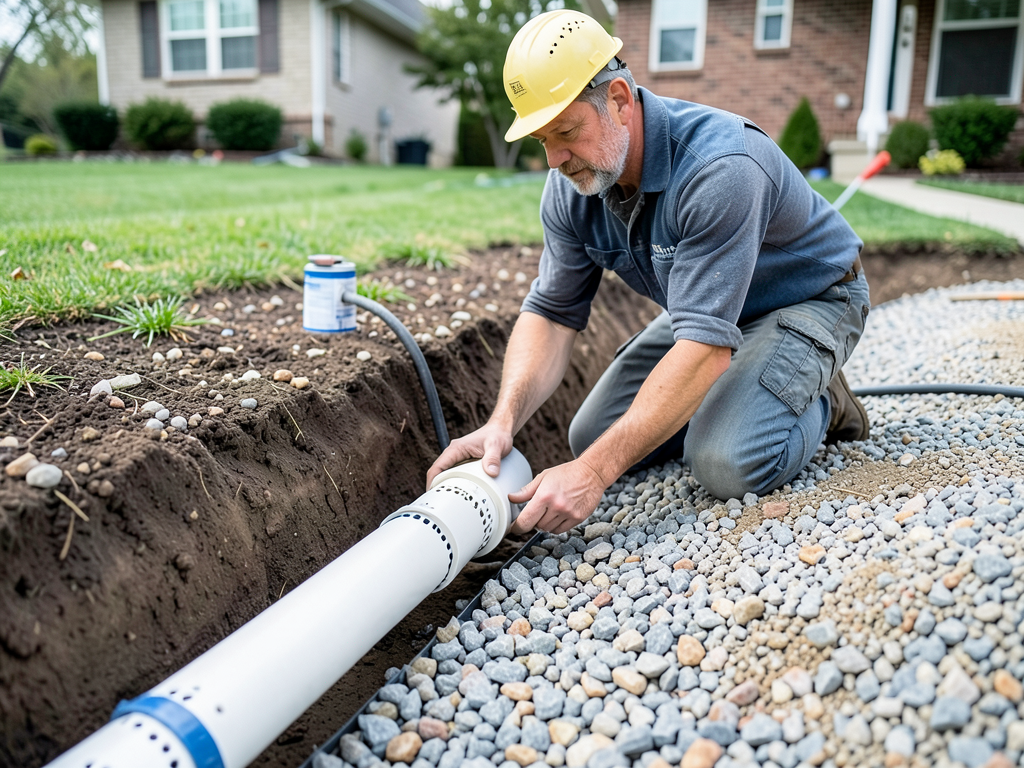
Perforated pipe placement involves laying 4-inch PVC pipe with holes facing downward. This orientation prevents sediment from entering through the holes while allowing water to enter from below. We use SDR35-rated pipe for its durability in underground applications.
Gravel backfill consists of clean, washed stone between 1-2 inches in diameter. This size allows maximum water flow while preventing soil infiltration. We fill the trench to within 4 inches of grade, then cover with soil and seed or sod.
Discharge management ensures water flows to an appropriate location. This might mean connecting to a dry well, storm drain, or creating a rain garden where water can safely dissipate.
Material Selection for Connecticut Conditions
Pipe material selection affects system longevity. We use Schedule 40 PVC for its resistance to soil chemicals and freeze-thaw damage. The pipe’s smooth interior prevents sediment buildup that can clog corrugated alternatives.
Gravel specifications matter in Byram’s soil conditions. Clean, washed stone with rounded edges provides better flow than crushed stone, which can interlock and reduce permeability. We specify gravel with at least 90% void space for optimal drainage.
Filter fabric quality determines system lifespan. Cheap fabric deteriorates within 5-7 years, allowing soil to clog the system. We use commercial-grade fabric rated for 25+ years underground.
Connectors and fittings must withstand soil movement. Connecticut’s freeze-thaw cycles cause soil expansion and contraction that can break inferior connections. We use welded PVC fittings that maintain watertight seals through seasonal changes.
Cost Factors for Byram French Drains
Project complexity drives pricing more than linear footage. Simple straight runs cost less per foot than systems requiring multiple directional changes or deep excavation through ledge.
Soil conditions significantly impact installation time. Rocky soil or ledge encounters can triple excavation time compared to sandy conditions. Byram’s mixed soil profile means costs vary even between neighboring properties.
Permit fees range from $150-400 depending on project scope. The Inland Wetlands Agency charges higher fees for larger projects or those near protected resources.
Restoration costs include sod replacement, regrading disturbed areas, and repairing any landscaping damage. These costs vary based on whether you want immediate sod installation or can wait for grass seed to establish.
Maintenance accessibility affects long-term costs. Systems with cleanouts at strategic locations cost more upfront but save money on future maintenance.
Maintenance Requirements
Annual inspections identify potential problems before they cause system failure. We recommend checking cleanouts each spring and after major storms to ensure water flows freely through the system.
Debris removal prevents pipe clogging. Leaves, soil, and roots can enter through surface grates and accumulate in the pipe. Regular cleaning maintains system capacity.
Surface grading adjustments compensate for soil settlement. Over time, soil around the drain settles, potentially creating low spots that hold water. Adding soil and reseeding maintains proper surface drainage.
Freeze protection involves ensuring the system drains completely. Standing water in pipes can freeze and crack them during Connecticut winters. Proper slope and cleanouts prevent freeze damage.
Vegetation management keeps roots away from pipes. Tree and shrub roots can penetrate small openings and clog the system. Maintaining a root-free zone around the drain prevents this damage.
Integration with Existing Systems
Sump pump integration provides backup drainage capacity. When connected properly, French drains can collect water that would otherwise overwhelm a sump pump, reducing pump runtime and extending its life.
Foundation waterproofing works with French drains to protect basements. The drain intercepts water before it reaches foundation walls, while waterproofing prevents any moisture that does contact the foundation from entering.
Landscape drainage coordination ensures all water moves in the right direction. French drains should complement, not conflict with, existing swales, downspout extensions, and grading patterns.
Stormwater management systems can connect to municipal infrastructure where allowed. This requires coordination with Greenwich’s Department of Public Works to ensure compliance with local codes.
Seasonal Considerations
Spring installation timing matters in Connecticut. Installing during frozen ground conditions increases costs and can damage equipment. We recommend scheduling between April and November when soil conditions are optimal.
Fall leaf cleanup prevents drain clogging. Byram’s mature trees drop significant leaf litter that can enter surface drains and accumulate in pipes. Regular fall maintenance prevents winter system failures.
Winter freeze-thaw cycles test system durability. Water that enters pipes during thaws can freeze overnight, expanding and potentially cracking pipes. Proper installation with adequate slope prevents standing water.
Summer drought conditions reveal system effectiveness. Well-functioning French drains maintain soil moisture levels that support healthy grass while preventing the soggy conditions that kill turf.
Common Mistakes to Avoid
Inadequate slope causes system failure. Drains need at least 1% grade to move water effectively. Steeper slopes up to 3% work better in heavy clay soils common in Byram.
Improper pipe orientation reduces efficiency. Holes facing upward allow sediment entry and reduce water collection. Always install perforated pipe with holes facing downward or to the sides.
Insufficient gravel depth limits system capacity. The gravel envelope around the pipe should extend at least 6 inches above and below the pipe to handle peak flows.
Missing cleanouts prevent maintenance. Without access points, diagnosing and clearing clogs becomes difficult and expensive. Include cleanouts at every directional change and at maximum 50-foot intervals.
Discharging to improper locations creates new problems. Never direct water toward foundations, property lines, or public walkways. Always terminate drainage on your property or connect to approved infrastructure.
Local Success Stories
A Byram property on Riversville Road experienced chronic basement flooding during spring rains. The solution involved installing a perimeter French drain connected to a dry well, eliminating basement water intrusion completely.
On Mead Avenue, a property with severe yard flooding required a comprehensive drainage plan including multiple French drains, regrading, and downspout extensions. The system handles even the heaviest storms without surface water accumulation.
A historic Byram home on the river faced unique challenges due to its proximity to wetlands. The solution involved careful permitting and installation of a French drain system that protected the foundation while maintaining compliance with environmental regulations.
Comparing French Drains to Other Solutions
Surface drains collect water at specific points but don’t address widespread saturation. French drains intercept water as it moves through soil, providing comprehensive drainage for entire problem areas.
Sump pumps only work for water that reaches a collection point. French drains prevent water from accumulating near foundations in the first place, reducing reliance on mechanical systems.
Grading improvements alone often prove insufficient in Byram’s flat terrain. While proper grading helps, it cannot overcome the area’s high water table and clay soil conditions.
Retention ponds require significant space and can become mosquito breeding grounds. French drains provide drainage without creating standing water hazards.
Frequently Asked Questions
How long does French drain installation take?
Most residential installations complete in 2-3 days depending on soil conditions and system complexity. Simple straight runs install faster than systems requiring multiple connections or deep excavation.
Will a French drain ruin my landscaping?
Installation disturbs existing landscaping, but we restore it afterward. Grass seed establishes in 2-3 weeks while sod provides immediate coverage. Most clients find the drainage improvement worth temporary disruption.
How much maintenance does a French drain need?
Annual inspections and occasional cleaning suffice for most systems. Cleanouts allow easy maintenance access. Properly installed systems with quality materials need minimal upkeep for 15-20 years.
Can I install a French drain myself?
DIY installation risks improper slope, incorrect materials, and code violations. Professional installation includes proper permitting, correct materials, and warranty protection that DIY cannot match.
What happens if my French drain clogs?
Cleanouts allow easy access for clearing clogs. Most clogs result from roots or sediment and clear with professional equipment. Systems with proper installation and maintenance rarely experience complete failure.
Call United Plumbing for Your Byram Drainage Solution
Don’t let another season of yard flooding damage your property. United Plumbing understands Byram’s unique drainage challenges and Connecticut’s specific requirements. Our technicians have installed hundreds of French drain systems throughout Fairfield County, each designed for local conditions and built to last. Plumbing Stamford.
We handle everything from initial assessment through final restoration, including all necessary permits and code compliance. Our systems come with warranties and our work includes proper cleanup and restoration of your property.
Pick up the phone and call (475) 320-3733 today to schedule your inspection. Our team will evaluate your specific drainage issues and provide a detailed plan to solve your yard flooding problems permanently. Don’t wait for the next storm to cause more damage to your Byram property.
Call (475) 320-3733 now and take the first step toward a dry, usable yard. We’re ready to help you solve your drainage problems with proven French drain solutions designed for Byram’s unique conditions.