
Why Your Laundry Room Smells Like Sewage After a Week Away
The first thing you notice when you walk into your laundry room after a week away is that unmistakable rotten egg smell. It’s not your dirty laundry. It’s sewer gas seeping up from a dry p-trap under your washing machine. Emergency Sewer Backup Cleanup.
When plumbing fixtures sit unused for days or weeks, the water in the p-trap evaporates. This creates an open channel for methane and hydrogen sulfide to escape from your sewer line into your home. The smell is unpleasant, but the real danger is the toxic gases that can cause headaches, nausea, and respiratory issues. Plumbing Stamford.
Greenwich homes with guest suites, seasonal properties, or basement laundry rooms face this problem more often than you might think. The local climate and housing patterns create perfect conditions for trap evaporation.
How the P-Trap Water Seal Works
The p-trap is a curved pipe under your washing machine drain that holds water to create a seal. This water barrier blocks sewer gases from rising up through the drain. When the trap dries out, that seal breaks and gases escape freely. The Most Reliable Drain Cleaning Services in Old Greenwich.
Water in the trap can evaporate for several reasons. High indoor temperatures from your HVAC system can accelerate evaporation. In older Greenwich homes with cast iron plumbing, the material can also absorb moisture from the trap over time.
During Connecticut winters, heated basements can cause traps to dry faster than you’d expect. The combination of dry indoor air and infrequent use creates the perfect storm for sewer gas leaks.
Common Causes of Dry P-Traps in Greenwich Homes
Seasonal homes and guest bathrooms are the biggest culprits. If you have a basement laundry room that only gets used during certain seasons, the trap can dry out completely in just 3-5 days of inactivity.
Greenwich’s high water table in coastal areas means more moisture in the air, which can actually speed up evaporation in some cases. The mineral content in local water also leaves deposits that can affect the trap’s seal over time.
Floor drains in laundry rooms are particularly vulnerable. These drains often sit unused for months, and the shallow trap design means they dry out faster than sink or shower traps.
The Science Behind Trap Evaporation
Water evaporates based on surface area, temperature, and air movement. A typical p-trap holds about 4-6 ounces of water. At room temperature with normal humidity, this water can completely evaporate in 72 hours.
The process accelerates when your HVAC system runs. Forced air heating and cooling creates air movement that speeds evaporation. In Greenwich’s climate, where heating systems run frequently in winter and AC runs in summer, traps can dry surprisingly fast.
Vent stack issues can also cause problems. If your plumbing vent is blocked by leaves, bird nests, or debris, negative pressure can siphon water out of traps. This is more common in older Greenwich homes with aging vent systems.
DIY Fix: Repriming Your P-Trap
The fix is simple but requires the right technique. Pour 2-3 quarts of water down the drain to refill the trap. For laundry room floor drains, use a bucket rather than running water from the sink to ensure you’re adding enough volume.
Here’s the trick that many homeowners miss: add a tablespoon of mineral oil to the water after refilling. The oil floats on top and creates a barrier that slows evaporation by up to 80%. This is especially useful for guest bathrooms or seasonal properties.
For basement floor drains, consider using a non-evaporating liquid trap primer. These products contain antifreeze-like compounds that stay liquid for months without evaporating.
Health Risks of Sewer Gas Exposure
Sewer gas isn’t just smelly. It contains hydrogen sulfide, methane, ammonia, and carbon dioxide. Hydrogen sulfide at low concentrations causes eye irritation and respiratory issues. At higher concentrations, it can cause loss of consciousness and even death.
Methane is flammable and can create explosive conditions in enclosed spaces. While your laundry room probably isn’t airtight enough for an explosion, the gas can still accumulate to dangerous levels over time.
Ammonia and other compounds in sewer gas can trigger asthma attacks and cause chronic respiratory problems with prolonged exposure. Children and elderly family members are especially vulnerable.
When to Call a Professional Plumber
If the smell returns within 24 hours after repriming the trap, you have a bigger problem. This usually indicates a venting issue, a broken trap, or a blockage in your main sewer line.
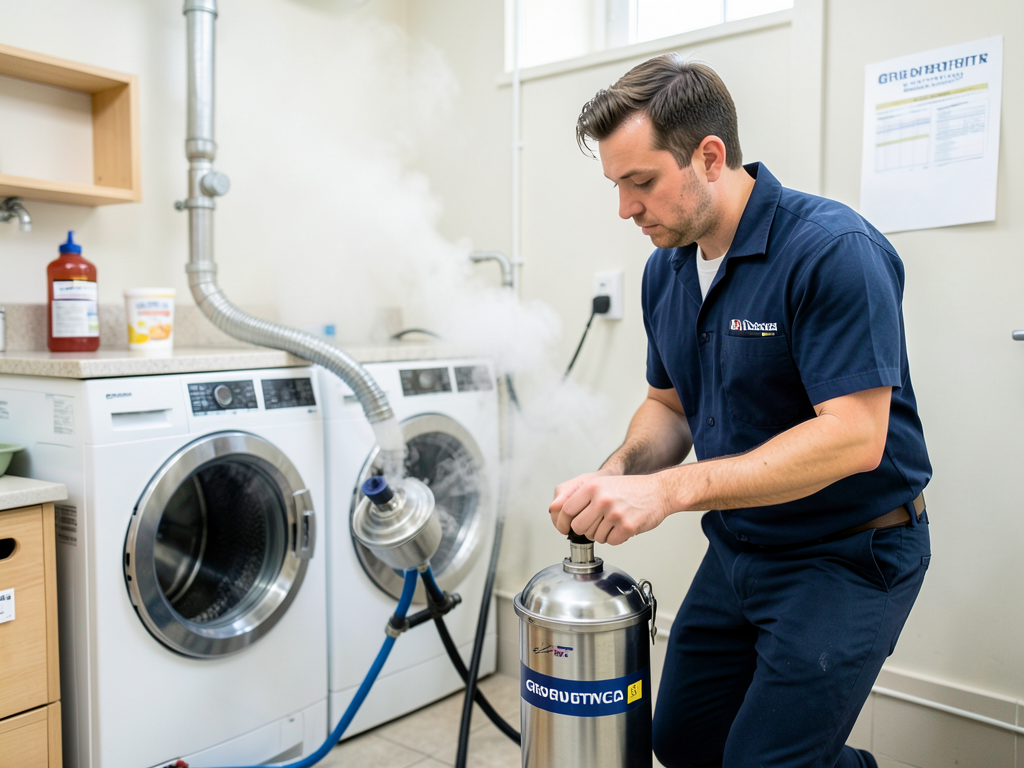
Professional plumbers use smoke testing to identify where gases are escaping. We introduce non-toxic smoke into your plumbing system and watch where it escapes. This reveals cracks, loose connections, or venting problems that aren’t visible to the naked eye. Emergency Plumbers in Greenwich Who Actually Answer the Phone at 3 AM.
In Greenwich’s older homes, cast iron traps can crack or develop leaks at the joints. These require replacement with modern PVC traps that resist corrosion and maintain their seal better over time.
Greenwich-Specific Plumbing Considerations
Greenwich homes built before 1970 often have cast iron plumbing that’s nearing the end of its useful life. These pipes corrode from the inside out, creating rough surfaces that trap debris and reduce water flow.
The local water chemistry affects plumbing differently than in other areas. Greenwich’s water comes from the Aquarion Water Company and contains minerals that can build up in traps and drains over time.
Many Greenwich properties have septic systems rather than municipal sewer connections. Septic systems require different maintenance and can produce different gas compositions that may affect how traps perform.
Preventative Solutions for Long-Term Protection
Install trap primers on floor drains and infrequently used fixtures. These devices automatically add a small amount of water to the trap whenever the main water line is used. They’re especially useful in guest bathrooms and laundry rooms.
Consider upgrading to larger diameter traps in high-risk areas. Bigger traps hold more water and take longer to evaporate. This is particularly useful for basement laundry rooms and utility sinks.
Regular plumbing inspections can catch problems before they cause odors. A licensed plumber can check for early signs of corrosion, loose connections, or venting issues that might lead to trap problems.
Comparing DIY vs Professional Solutions
| Solution Type | Cost Range | Effectiveness | Time to Complete | Best For |
|---|---|---|---|---|
| Simple Trap Refill | $0-5 | Temporary | 5 minutes | One-time fix |
| Mineral Oil Treatment | $5-10 | 1-3 months | 10 minutes | Seasonal homes |
| Trap Primer Installation | $150-300 | Permanent | 1-2 hours | Infrequently used fixtures |
| Professional Inspection | $100-200 | Diagnostic | 30-60 minutes | Persistent problems |
| Complete Trap Replacement | $200-500 | Permanent | 2-4 hours | Damaged or corroded traps |
Emergency Response Steps
If you walk into a strong sewer gas smell, take these steps immediately:
- Open windows and doors to ventilate the area
- Turn off any open flames or gas appliances
- Leave the area if the smell is overwhelming
- Call (475) 320-3733 for emergency plumbing service
- Don’t use any plumbing fixtures until the problem is diagnosed
Strong sewer gas smells can indicate serious problems like broken sewer lines or blocked vents. These require immediate professional attention to prevent health hazards and property damage.
Frequently Asked Questions
How long does it take for a p-trap to dry out?
A typical p-trap can dry out completely in 3-5 days of non-use, depending on temperature, humidity, and air movement. Floor drains and laundry room traps often dry faster due to their shallow design.
Is a dry p-trap dangerous?
Yes. A dry p-trap allows sewer gases containing hydrogen sulfide and methane to enter your home. These gases can cause respiratory problems, headaches, and in high concentrations, pose serious health risks or explosion hazards.
Can I prevent my p-trap from drying out?
Yes. Use mineral oil to slow evaporation, install trap primers for automatic refilling, or run water through unused fixtures weekly. For seasonal properties, consider professional winterization services.
Call for Professional Help
Don’t let sewer gas problems linger. The smell is your home’s warning system telling you something’s wrong with your plumbing. Whether you need a simple trap refill, a professional inspection, or complete trap replacement, we’re here to help.
Call (475) 320-3733 today to schedule your inspection. We serve all of Greenwich including Old Greenwich, Riverside, Cos Cob, and the Back Country area. Our licensed plumbers can diagnose and fix your sewer gas problems quickly and permanently.
Pick up the phone and call (475) 320-3733 before the next storm hits or your next vacation ends. Don’t let a simple plumbing problem turn into a serious health hazard for your family. For more information, visit EPA sewer gas information. For more information, visit CDC hydrogen sulfide safety data.