
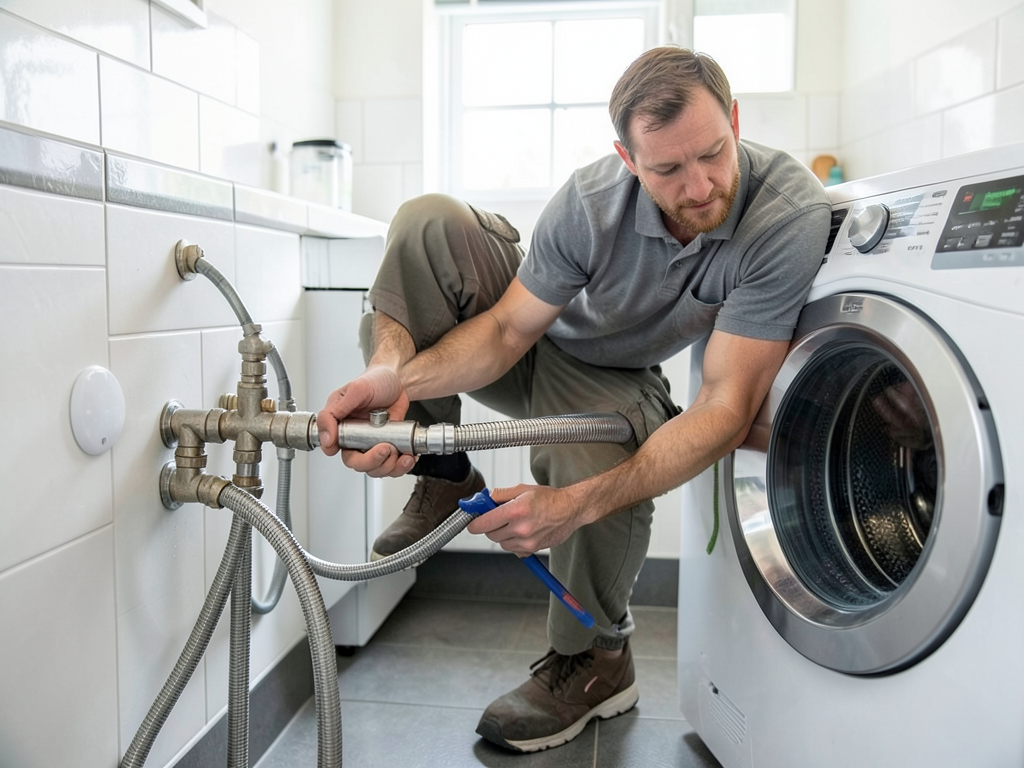
The One Small Part in Your Laundry Room That Could Flood Your Entire Greenwich Home
Old washing machine hoses are the silent culprits behind thousands of gallons of water damage in Greenwich homes every year. These rubber or reinforced plastic lines connect your washing machine to your home’s water supply and can burst without warning, releasing water at full pressure until you manually shut it off. A single burst hose can pump out over 600 gallons of water per hour, turning your laundry room into a disaster zone within minutes.. Read more about How to Tell if Your Older Greenwich Home Still Has Risky Polybutylene Piping.
Greenwich homes face unique risks because many were built before modern plumbing standards required high-quality connections. The combination of aging infrastructure, high water pressure from the Aquarion Water Company supply, and the seasonal temperature fluctuations common in coastal Fairfield County creates the perfect conditions for hose failure. That small rubber tube behind your washing machine deserves more attention than it gets. Plumbing Stamford.
How Washing Machine Hoses Fail in Greenwich Homes
Most washing machine hose failures happen gradually over time. The constant expansion and contraction from hot and cold water cycles weakens the rubber material. Add in the mineral-rich water from local aquifers and the high-pressure supply common in Greenwich neighborhoods, and these hoses can fail in as little as five years.
The first sign of trouble often goes unnoticed. Small bubbles or blisters form on the hose surface where the inner tube is separating from the outer reinforcement. These weak spots can burst under normal water pressure, which ranges from 40 to 80 PSI in most Greenwich homes. When a hose fails, the water pressure from your home’s supply line forces water through the break at full force. EPA Water Efficiency Standards.
Water damage from a burst washing machine hose can be catastrophic. The laundry room is often located near bedrooms, kitchens, or finished basements. When a hose bursts while you’re sleeping or away from home, the water spreads quickly through walls and under flooring. Many Greenwich homeowners discover the damage only after returning from vacation or waking up to find inches of water throughout their first floor.. Read more about What That Loud Banging Noise in Your Walls Actually Means (It’s Not Ghosts).
Rubber vs. Stainless Steel: Which Hose Protects Your Home Better?
The debate between rubber and stainless steel braided hoses comes down to longevity and failure resistance. Standard rubber hoses cost less but fail more frequently. They’re susceptible to UV damage, kinking, and internal deterioration that you cannot see until it’s too late.. Read more about Why a Standard Sump Pump Is Not Enough During a Greenwich Power Outage.
Braided stainless steel hoses offer superior protection. The steel mesh covering prevents the rubber from expanding under pressure and protects against external damage. These hoses resist UV light, chemicals, and physical impacts that can damage rubber hoses. While they cost more upfront, they typically last 10-15 years compared to 5-7 years for standard rubber hoses.
| Hose Type | Average Lifespan | Burst Pressure Rating | Best For Greenwich Homes |
|---|---|---|---|
| Standard Rubber | 5-7 years | 1,500 PSI | Budget-conscious replacement |
| Braided Stainless Steel | 10-15 years | 1,800+ PSI | High-pressure areas, vacation homes |
| Super-Braided Steel | 15-20 years | 2,000+ PSI | Luxury homes, historic properties |
Warning Signs Your Washing Machine Hoses Are About to Fail
Most hose failures give warning signs before the catastrophic burst. Learning to recognize these signs can save your home from extensive water damage. The diagnostic process starts with a visual inspection behind your washing machine.
Look for these specific warning signs during your inspection. Bubbles or blisters on the hose surface indicate internal separation. Corrosion around the hose fittings suggests water is seeping through microscopic cracks. Kinks or sharp bends in the hose create weak points that fail under pressure. Rust-colored water when you first turn on the washing machine indicates internal hose deterioration.
The feel test provides additional information. A healthy hose should feel firm but slightly flexible. If the hose feels soft, spongy, or has areas that collapse when you squeeze them, the internal reinforcement has failed. Hoses that make a crackling sound when bent have developed internal cracks that will soon lead to failure.
Age is another critical factor. Most washing machine hoses should be replaced every five years regardless of their appearance. If you cannot remember when your hoses were last replaced or if your home is more than five years old and you haven’t replaced them, you’re operating on borrowed time.
Professional Installation vs. DIY: What Greenwich Homeowners Need to Know
Replacing washing machine hoses seems simple, but professional installation prevents future problems. The difference between a DIY job and professional work often determines whether you’ll face another emergency in a few years. Emergency Plumbers in Greenwich Who Actually Answer the Phone at 3 AM.
Professional plumbers inspect the entire water supply system during hose replacement. They check the shut-off valves for corrosion, ensure proper water pressure, and verify that the drain connections are secure. Many DIY installations fail because homeowners overtighten connections or use improper thread sealant, leading to slow leaks that cause damage over time. The Most Reliable Drain Cleaning Services in Old Greenwich.
The Connecticut State Building Code requires proper installation of all plumbing connections. This includes using the correct type of fittings for your specific water pressure and ensuring all connections meet local code requirements. Professional plumbers understand these requirements and carry the proper tools and materials to do the job right the first time.. Read more about Plumbing Repairs Needed to Pass a Greenwich Home Inspection.
Insurance companies often deny claims for water damage caused by improper DIY plumbing work. If you install your own hoses and they fail due to improper installation, your homeowner’s insurance might not cover the resulting damage. Professional installation provides documentation that your plumbing meets current standards.
Emergency Shut-Off Procedures Every Greenwich Homeowner Should Know
Knowing how to shut off your washing machine water supply can prevent thousands of dollars in damage if a hose bursts. Every Greenwich homeowner should locate and test their washing machine shut-off valves before an emergency occurs.
Your washing machine has two separate shut-off valves, one for hot water and one for cold water. These are typically located on the wall behind or near the washing machine. The valves are usually chrome or brass handles that turn clockwise to shut off the water. In some older Greenwich homes, these valves might be difficult to turn due to corrosion or mineral buildup.
Test your shut-off valves every six months by turning them off and on. If a valve feels stuck or requires excessive force, it needs replacement. A stuck valve during an emergency means you cannot stop the water flow, leading to extensive flooding while you search for the main house shut-off.
The main water shut-off for your home is typically located where the water line enters your house. In Greenwich, this is often in the basement or crawl space. Knowing this location is crucial because if the washing machine valves fail, you need to shut off water to the entire house to stop the flooding.
Cost Factors for Washing Machine Hose Replacement in Greenwich
Professional washing machine hose replacement in Greenwich typically costs between $150 and $300, depending on several factors. The basic service includes removal of old hoses, inspection of shut-off valves, installation of new hoses, and testing for leaks.
Additional costs may apply if your shut-off valves need replacement or if your washing machine is located in a difficult-to-access area. Homes in historic districts like Old Greenwich or Cos Cob might have older plumbing that requires more careful work, potentially increasing labor time.
The type of hose you choose significantly impacts the total cost. Standard rubber hoses might cost $20-30 per hose, while high-quality braided stainless steel hoses cost $40-60 each. Professional installation of the higher-quality hoses still provides better value over time due to their longer lifespan and superior protection.
Emergency service calls for burst hoses cost more, typically $250-400, and may include additional water damage mitigation services. This is why preventative replacement is always more cost-effective than emergency repair. Why We Are the Top Rated Pipe Repair Specialists in Byram.
Greenwich-Specific Plumbing Considerations
Greenwich homes face specific plumbing challenges due to the area’s water quality and infrastructure. The Aquarion Water Company supplies water from multiple sources, including reservoirs and wells, resulting in varying mineral content across different neighborhoods.
Areas like Riverside and Old Greenwich often experience higher water pressure due to their elevation relative to water towers and pumping stations. This increased pressure puts additional stress on washing machine hoses and other plumbing connections. Homes in these areas benefit more from upgrading to high-pressure rated hoses.
The seasonal temperature variations in coastal Fairfield County cause pipes and hoses to expand and contract more dramatically than in more temperate climates. This thermal cycling accelerates the deterioration of rubber components. Greenwich homeowners should consider this factor when deciding between standard and premium hose options.
Many Greenwich homes were built before modern plumbing codes required specific hose quality standards. These older homes often have plumbing systems that operate at higher pressures than newer construction. Professional plumbers familiar with Greenwich’s housing stock understand these unique challenges and can recommend appropriate solutions.
Insurance Coverage for Washing Machine Hose Damage
Homeowner’s insurance policies in Connecticut typically cover sudden and accidental water damage, including that caused by burst washing machine hoses. However, coverage details vary significantly between policies and insurance companies.
Most policies cover the cost of water damage restoration but may not cover the cost of replacing the failed hose or repairing the plumbing connection. Some insurers offer additional coverage for appliance failures or water damage prevention systems that can reduce your out-of-pocket costs.
Insurance companies look at maintenance history when processing claims. If your hoses were old or showed signs of deterioration that you ignored, your claim might be denied based on lack of proper maintenance. Keeping records of professional plumbing inspections and maintenance can support your claim if you need to file one.
Some insurance companies offer premium discounts for homes with water leak detection systems or automatic shut-off valves. These systems can detect abnormal water flow and shut off the supply automatically, preventing extensive damage from burst hoses.
Preventative Maintenance Schedule for Greenwich Homeowners
Creating a maintenance schedule helps prevent washing machine hose failures and other plumbing emergencies. Regular inspections catch problems before they cause damage, saving you money and stress.
Monthly inspections should include checking for visible signs of hose deterioration, testing shut-off valves, and ensuring the washing machine is properly leveled. Leveling prevents excessive vibration that can stress hose connections and cause premature failure.
Every six months, test your shut-off valves by turning them off and on. This prevents them from seizing due to mineral buildup or corrosion. Also, check the washing machine’s water supply lines for any signs of moisture or corrosion around the connections.
Annual professional plumbing inspections should include a thorough check of all water supply lines, including washing machine hoses. Professional plumbers can identify issues that homeowners might miss, such as internal hose deterioration or improper water pressure.
Replace washing machine hoses every five years regardless of their appearance. This preventative replacement costs far less than emergency service calls and water damage restoration.
Frequently Asked Questions
How often should washing machine hoses be replaced in Greenwich homes?
Every five years, regardless of appearance. Greenwich’s water quality and pressure variations can accelerate hose deterioration, making regular replacement essential for preventing water damage.
Can I install washing machine hoses myself or should I hire a professional?
While DIY installation is possible, professional installation ensures proper connections, code compliance, and includes inspection of your entire water supply system. Professional work also provides documentation for insurance purposes.
What type of washing machine hose is best for high water pressure areas?
Braided stainless steel hoses with a burst pressure rating of 1,800+ PSI are best for high-pressure areas. They resist expansion under pressure and provide superior protection against catastrophic failure.
Does homeowner’s insurance cover damage from burst washing machine hoses?
Most policies cover sudden and accidental water damage, but coverage varies. Some insurers offer additional coverage for appliance failures or water damage prevention systems that can reduce your out-of-pocket costs.
How can I tell if my washing machine shut-off valves need replacement?
Test your valves every six months by turning them off and on. If they feel stuck, require excessive force, or show signs of corrosion, they need replacement. Stuck valves during an emergency mean you cannot stop the water flow.
What should I do if my washing machine hose bursts while I’m not home?
Install an automatic water shut-off valve that detects abnormal water flow and shuts off the supply automatically. These systems can prevent extensive damage by stopping the water flow within seconds of a hose failure.
Don’t Wait for Disaster to Strike
Old washing machine hoses are ticking time bombs in your laundry room. The cost of preventative replacement is minimal compared to the potential damage from a burst hose. Greenwich homes deserve protection from this common but preventable plumbing emergency.
Professional plumbers understand the unique challenges of Fairfield County homes and can recommend the right hose type for your specific situation. They can also identify other potential plumbing issues that might cause problems in the future.
Call (475) 320-3733 today to schedule your washing machine hose inspection and replacement. Our experienced plumbers serve all Greenwich neighborhoods and can complete most replacements in under an hour. Don’t let a small rubber hose turn into a major flood in your home.
Pick up the phone and call (475) 320-3733 before the next load of laundry becomes a disaster. Your home deserves the peace of mind that comes with properly installed, high-quality plumbing components.
United Plumbing has served Fairfield County for over 15 years, providing reliable service and expert advice to homeowners throughout Greenwich, Stamford, and surrounding communities. We understand the local water conditions and building codes that affect your plumbing decisions. Expert Boiler Repair for Historic Greenwich Homes.
Don’t gamble with your home’s safety. That small hose behind your washing machine deserves professional attention before it causes thousands of dollars in damage. Call now and protect your Greenwich home from preventable water damage. For more information, visit IICRC Water Damage Restoration Standards.